
Nigeria is forfeiting an estimated ₦5 trillion every year due to massive food losses caused by poor transportation and logistics, industry leaders have warned, urging the Federal Government to implement far-reaching reforms to rescue the nation’s struggling supply chain.
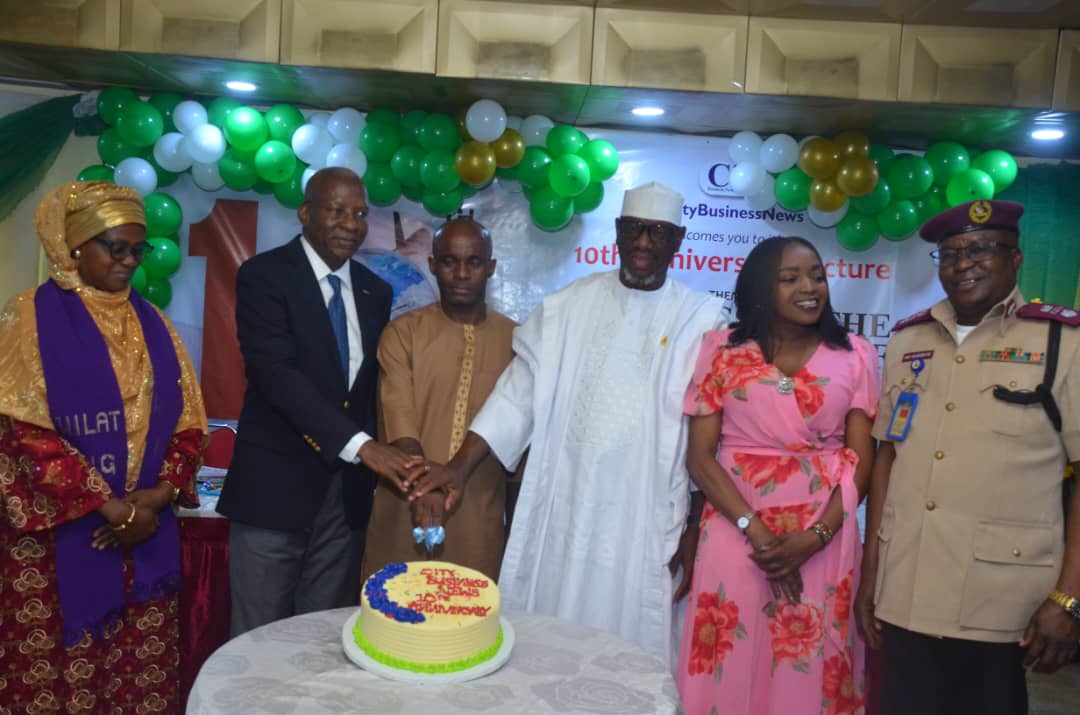
The concern was raised during the 10th Anniversary Lecture of City Business News held in Lagos, where stakeholders examined the theme, “Logistics as the Engine Room of Nigeria’s Economy.” Participants agreed that fixing Nigeria’s logistics sector is essential to tackling food inflation, improving agricultural productivity, and stimulating economic growth.
Delivering the keynote address, President of the Chartered Institute of Logistics and Transport (CILT) and former Corps Marshal of the Federal Road Safety Corps (FRSC), Dr. Boboye Oyeyemi, described Nigeria’s logistics system as one of the weakest links in the country’s economy.
According to him, between 30 million and 40 million metric tonnes of food produced annually never reach consumers because they spoil during transportation, resulting in economic losses estimated at ₦3.5 trillion to ₦5 trillion each year.
He attributed the problem to deteriorating road infrastructure, multiple security checkpoints, high transportation costs, inconsistent government policies, and the rising cost of diesel.
“The Middle Belt remains Nigeria’s major food-producing region, but a significant percentage of agricultural produce perishes before arriving in major markets such as Lagos due to poor logistics,” Oyeyemi explained.
He also revealed that transport operators spend between ₦150,000 and ₦250,000 per trip on illegal payments at various checkpoints across the country, further increasing the cost of moving goods and ultimately driving up food prices for consumers.
To address the crisis, Oyeyemi urged the Federal Government to dismantle illegal roadblocks, expand access to Compressed Natural Gas (CNG) for commercial transport operators, and encourage the adoption of dual-fuel vehicles to lower operating costs.
He further recommended the appointment of a Coordinating Minister for Transportation to harmonise policies across the country’s transport sector and improve efficiency.
The logistics expert also called for the reintroduction of weighbridges on major highways to prevent overloaded trucks from damaging road infrastructure.
Adding his voice, Founder of ABC Transport Plc, Sir Frank Nneji, lamented years of neglect in Nigeria’s road transport sector, arguing that while aviation receives significant government investment, road users continue to grapple with poor infrastructure and growing insecurity.
He advocated increased private sector participation in road development through concessioning and called for stronger security measures to protect motorists and transport businesses.
Responding to stakeholders’ concerns, FRSC Corps Marshal Shehu Mohammed assured participants that the agency remains committed to improving road safety through stricter enforcement, public awareness campaigns, and collaboration with transport operators.
On gender inclusion, President of Women in Logistics and Transport (WiLAT), Mrs. Khadijat Sheidu-Sabi, represented by Mrs. Fatima Jatto of the Nigerian Ports Authority, stressed that empowering women within the logistics industry is vital to achieving sustainable sector growth.
Stakeholders unanimously agreed that without decisive government intervention to improve infrastructure, eliminate operational bottlenecks, and provide a stable policy environment, Nigeria’s logistics sector will continue to undermine economic development.
They maintained that an efficient logistics system is critical to reducing post-harvest losses, stabilising food prices, strengthening supply chains, attracting investment, and unlocking Nigeria’s full economic potential.
About the Author