In this article
- Why INEC Is Bringing Transport Unions Into 2027 Election Planning
- What INEC’s Electoral Logistics Committee Will Do
- Committee to Review Previous Elections, Identify Weaknesses
- Security Measures for Difficult and Riverine Communities
- Agencies and Organisations Represented at the Inauguration
- What This Means for the 2027 General Election
The Independent National Electoral Commission (INEC) has enlisted the Nigerian Union of Road Transport Workers (NURTW), Nigerian Ports Authority (NPA) and Maritime Workers Union of Nigeria to strengthen election logistics and prevent delays ahead of the 2027 general election.
The stakeholders were among representatives of government agencies, transport unions and security organisations who attended the inauguration of INEC’s Electoral Logistics Committee (ELOC) in Abuja on Thursday.
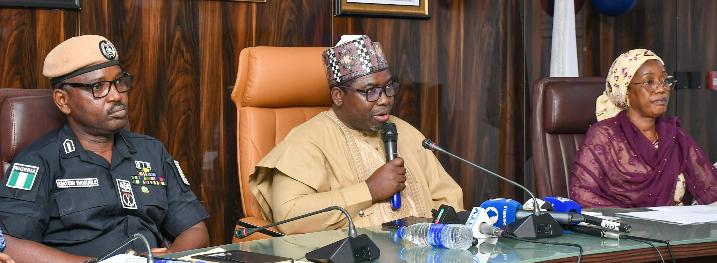
The committee, inaugurated by INEC Chairman, Prof. Joash Amupitan, is expected to develop a comprehensive strategy for transporting electoral personnel and materials across Nigeria, including remote communities, difficult terrains and riverine areas.
The move comes as INEC intensifies preparations for the 2027 general election, with the Commission seeking to address logistical challenges that could delay the opening of polling units and affect voters’ ability to exercise their franchise.
Why INEC Is Bringing Transport Unions Into 2027 Election Planning
Election logistics remain a critical part of Nigeria’s electoral process because sensitive and non-sensitive materials must reach designated locations securely and on schedule.
According to INEC, transporting these materials across the country requires coordinated road, air and maritime operations, particularly in areas where poor road networks, difficult terrain and security threats could disrupt distribution.
Amupitan said the Commission adopted a multi-agency approach because of the complexity of moving election materials across Nigeria’s diverse geographical landscape.
He stressed that the credibility of an election depended partly on whether polling units were open, properly equipped and ready to receive voters at the appointed time.
“Election logistics involve the intricate movement of both sensitive and non-sensitive materials by land, sea and air. It requires precision, security and timeliness. This is why we are starting early,” the INEC chairman said.
The involvement of the NURTW, NPA and Maritime Workers Union is expected to support transportation planning across road networks, seaports and riverine communities.
What INEC’s Electoral Logistics Committee Will Do
The Electoral Logistics Committee is expected to assess INEC’s transportation and operational requirements and prepare a comprehensive plan covering the storage, distribution, deployment and retrieval of election materials.
Its responsibilities will include auditing the readiness of warehouses, vehicles and transportation hubs, including airports and seaports, to identify operational gaps and recommend corrective measures.
The committee will also coordinate with government agencies and transport unions, monitor compliance with approved logistics schedules and develop strategies to address transportation bottlenecks, equipment shortages and security threats.
Amupitan said Nigeria’s geographical diversity, from the creeks of the Niger Delta to the arid plains of the North, required a flexible and resilient logistics framework.
“We must anticipate the weather, the terrain and the security environment to ensure that no Nigerian is disenfranchised due to late arrival of materials,” he said.
He described preparations for the 2027 general election as “a marathon, not a sprint,” explaining that the early establishment of the committee was intended to lay the groundwork for an efficient and credible electoral process.
Committee to Review Previous Elections, Identify Weaknesses
Speaking on behalf of the committee, its chairperson, Rear Admiral Jamila Malafa (rtd), said INEC had previously established inter-agency committees to manage complex operational assignments, including election logistics.
She said the committee would review lessons from previous electoral exercises and develop a strategic plan to improve the deployment of logistics equipment while addressing existing weaknesses.
According to Malafa, the committee’s priorities will include airlift and cargo planning, storage facilities, vehicle fleets, aircraft availability and cargo-handling capacity.
The objective is to reduce delays in distributing election materials and improve coordination between INEC and the agencies responsible for transportation and security.
The committee will also coordinate the movement of personnel and materials down to local government areas, including communities accessible primarily by water.
Security Measures for Difficult and Riverine Communities
Beyond transportation planning, the committee will develop an operational security framework involving transport unions, security agencies and INEC state offices.
It will identify difficult terrains, security-challenged areas and locations prone to crises, with tailored transportation and security arrangements proposed for each category.
Malafa disclosed that ad hoc subcommittees could be established to oversee specific areas, including airlift operations, land transportation, maritime transportation, storage and security.
She said effective cooperation among participating agencies would be essential to achieving the committee’s objectives, alongside clear schedules for moving materials and coordinated policy decisions.
“This national assignment demands speed, precision and coordination,” she said, urging members to approach the responsibility with patriotic dedication and professional excellence.
Agencies and Organisations Represented at the Inauguration
The inauguration brought together representatives of several government institutions and security agencies, including the Inspector-General of Police, Nigerian Correctional Service, Central Bank of Nigeria, Nigerian Civil Aviation Authority, Federal Airports Authority of Nigeria, Nigeria Security and Civil Defence Corps and Nigeria Customs Service.
Transport and maritime stakeholders represented included the NURTW, Nigerian Association of Road Transport Owners, Nigerian Ports Authority and Maritime Workers Union of Nigeria.
Their participation reflects INEC’s effort to strengthen inter-agency coordination before the next general election.
What This Means for the 2027 General Election
INEC’s early logistics planning signals an effort to reduce operational failures that have historically posed challenges during elections, particularly delays in delivering materials and opening polling units on time.
However, the effectiveness of the initiative will depend on how successfully the committee translates its plans into practical arrangements across Nigeria’s 36 states and the Federal Capital Territory.
For voters, the central expectation is that election materials and personnel will arrive at designated polling units on time, regardless of location or transportation challenges.
The committee’s work will therefore be an important part of INEC’s broader preparations for the 2027 general election, as the Commission seeks to improve operational readiness and ensure that eligible Nigerians are not disadvantaged by logistical delays.