In this article
- What is under-dispensing?
- NMDPRA orders immediate pump checks
- Filling stations could lose their licences
- About 20 stations reportedly sealed
- PETROAN orders nationwide meter inspection
- Why is this happening now?
- How can motorists know if a station is under-dispensing?
- 1. Watch the pump display
- 2. Pay attention to unusual pump behaviour
- 3. Keep receipts
- 4. Report suspected irregularities
- Does a higher petrol price mean motorists are getting less fuel?
- What happens to stations found under-dispensing?
- What does this mean for Nigerian motorists?
- The bigger picture
The Nigerian petroleum sector regulator has launched a fresh crackdown on filling stations accused of under-dispensing petrol and other petroleum products, warning that serious or repeated violations could cost operators their licences.
The Nigerian Midstream and Downstream Petroleum Regulatory Authority (NMDPRA) issued the directive on Tuesday, September 22, 2026, after reporting incidents of under-dispensing at retail outlets across Nigeria.
The authority has ordered all retail outlet operators to immediately calibrate and verify their fuel dispensers and totalisers to ensure motorists receive the quantity of petroleum products for which they pay.
The development comes at a particularly sensitive time for Nigerian motorists, with petrol prices having risen sharply in recent weeks amid higher international crude prices and changing domestic supply costs.
What is under-dispensing?
Under-dispensing occurs when a filling station’s pump delivers less fuel than the quantity displayed on the dispenser or paid for by the customer.
For example, if a motorist pays for 20 litres but the equipment actually delivers less than that amount, the customer has effectively paid for fuel they did not receive.
NMDPRA says such practices constitute a serious breach of consumer trust.
However, the regulator’s directive also recognises that inaccurate dispensing can arise from improperly calibrated or faulty equipment, meaning every case does not necessarily establish deliberate fraud by a station operator.
NMDPRA orders immediate pump checks
The authority has directed filling station operators nationwide to carry out immediate calibration and verification of their dispensers and totalisers.
The objective is to ensure that the measurement displayed by the equipment corresponds with the actual quantity of petroleum product delivered to customers.
NMDPRA said it has intensified its inspection and enforcement activities and will take action against outlets found to be under-dispensing or otherwise compromising dispensing accuracy.
The regulator also directed major industry associations to communicate the order to their members.
They include the Major Energy Marketers Association of Nigeria (MEMAN), Depot and Petroleum Products Marketers Association of Nigeria (DAPPMAN), Independent Petroleum Marketers Association of Nigeria (IPMAN) and Petroleum Products Retail Outlet Owners Association of Nigeria (PETROAN).
Filling stations could lose their licences
The warning from NMDPRA goes beyond simply asking operators to adjust their pumps.
The authority said outlets found to be under-dispensing, using improperly calibrated equipment or otherwise compromising dispensing accuracy will be required to take corrective action.
Persistent or serious violations could attract sanctions up to and including revocation of the station’s operating licence.
This means filling station operators now face greater scrutiny over the accuracy of their dispensing equipment.
About 20 stations reportedly sealed
The latest directive follows previous enforcement operations by NMDPRA.
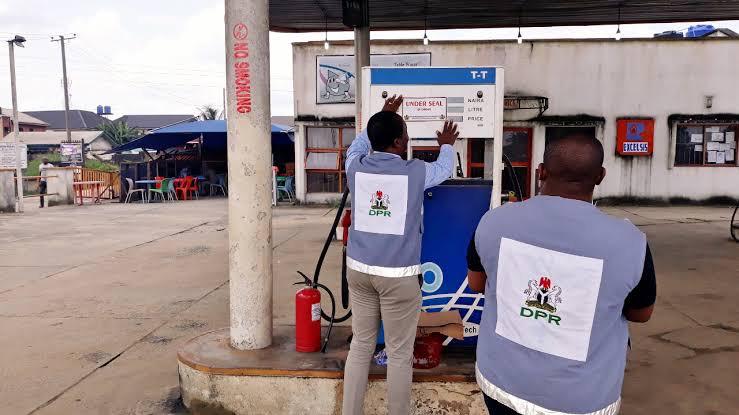
Punch reports that about 20 filling stations were sealed between 2025 and 2026 over under-dispensing.
The regulator’s latest warning therefore represents an escalation of an enforcement issue that has already resulted in stations being shut down.
PETROAN orders nationwide meter inspection
The warning has also triggered a response from petroleum retailers.
The Petroleum Products Retail Outlets Owners Association of Nigeria (PETROAN) ordered its members to inspect their dispensing meters following the NMDPRA directive.
PETROAN President Billy Gillis-Harry said the association held an emergency meeting after the regulator raised the issue and subsequently circulated instructions for members to check their meters.
He noted that faulty meters could potentially result in either under-dispensing or over-dispensing, reinforcing the need for equipment inspection and calibration.
The association’s response means some station operators are now checking their equipment proactively rather than waiting for regulatory inspections.
Why is this happening now?
The crackdown comes as petrol prices have become one of the biggest cost-of-living issues in Nigeria.
Recent reports put petrol prices in several major cities around ₦1,400–₦1,450 per litre, while some northern locations have recorded prices as high as ₦1,500.
Global crude prices have risen amid geopolitical tensions, increasing the cost pressures facing Nigeria’s deregulated downstream petroleum market.
At the same time, NMDPRA has stressed that it does not set petrol pump prices under the current market-based pricing system.
The authority has instead said its regulatory responsibility includes monitoring the market for practices such as price-gouging, collusion, under-dispensing and compromised product quality.
That distinction is important: NMDPRA is not ordering stations to sell petrol at a particular price; it is requiring them to accurately deliver the quantity customers pay for.
How can motorists know if a station is under-dispensing?
For ordinary motorists, detecting small differences in fuel volume can be difficult without calibrated measuring equipment.
However, there are some practical precautions consumers can take.
1. Watch the pump display
Before fuelling begins, ensure the dispenser starts from zero.
The displayed amount should then correspond to the quantity and price agreed with the attendant.
2. Pay attention to unusual pump behaviour
If a pump repeatedly stops, resets unexpectedly or appears to deliver fuel unusually slowly or inconsistently, consumers can request that the transaction be stopped and checked.
3. Keep receipts
Where receipts are issued, motorists should retain them, particularly if they believe there is a problem with the quantity dispensed.
A record of the transaction can be useful if a complaint is subsequently made.
4. Report suspected irregularities
NMDPRA has said it is strengthening surveillance and providing channels through which members of the public and industry stakeholders can report irregularities for investigation.
Consumers should avoid confronting station staff aggressively. A suspected measurement problem can be reported to the appropriate regulatory authority for verification.
Does a higher petrol price mean motorists are getting less fuel?
Not necessarily.
The two issues should be separated.
Petrol prices are currently influenced by market conditions, including crude oil costs, refinery economics, imported cargoes and logistics.
Under-dispensing, on the other hand, concerns whether the customer receives the correct quantity for the amount displayed and paid for.
A station can legally sell petrol at the prevailing market price but still be required to dispense the exact quantity represented by its pump.
Likewise, a pump can have a calibration problem without the station deliberately attempting to cheat customers.
The regulator’s inspection programme is intended to establish where such problems exist and require corrective action.
What happens to stations found under-dispensing?
According to NMDPRA, affected outlets will be required to take immediate corrective action.
Where violations are serious or persistent, sanctions can extend to revocation of the station’s operating licence.
The regulator has therefore placed responsibility on station operators to ensure their equipment remains accurate and compliant.
What does this mean for Nigerian motorists?
For motorists, the development could mean more frequent inspections and greater scrutiny of petrol pumps.
It could also increase pressure on filling station operators to maintain properly calibrated equipment.
That is particularly important at a time when every litre matters to consumers.
With petrol prices already putting pressure on household budgets, receiving less fuel than the quantity paid for effectively increases the cost of every litre consumed.
For businesses that depend heavily on petrol-powered vehicles, generators and logistics operations, even small discrepancies can accumulate into significant additional costs over time.
The bigger picture
The NMDPRA crackdown is part of a broader effort to strengthen consumer protection in Nigeria’s deregulated downstream petroleum market.
The regulator has previously said deregulation does not exempt petroleum marketers from complying with regulations or fair-trade requirements.
Its latest action therefore sends a straightforward message to filling station operators:
Whatever the market price of petrol, customers must receive the quantity they pay for.
For motorists, the message is equally simple: check the pump, keep your receipts and report suspected irregularities rather than assuming every short delivery is normal.