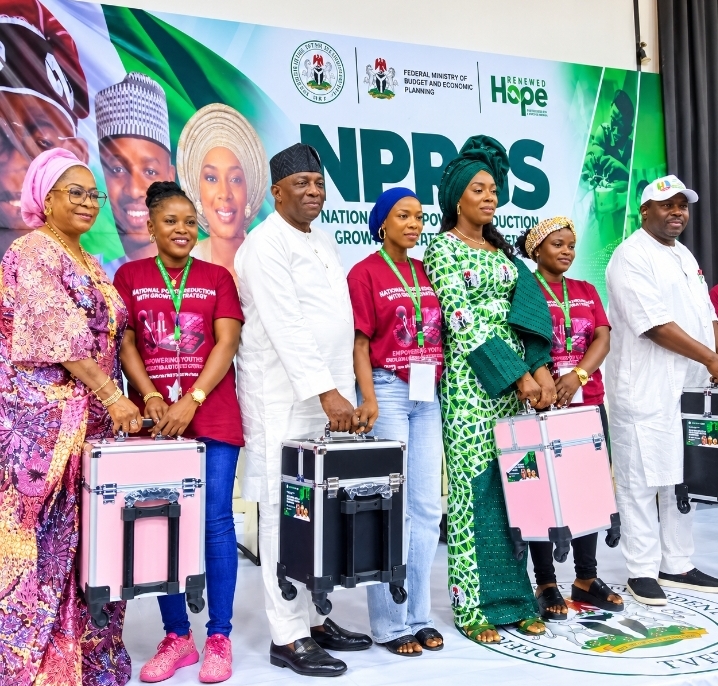
The Federal Government has empowered 700 beneficiaries in Oyo State with vocational training, digital devices and business starter kits under its National Poverty Reduction with Growth Strategy (NPRGS), as the administration targets lifting five million Nigerians out of poverty over the next four years.
The beneficiaries graduated on Friday, October 9, at a ceremony held in Ibadan after a programme that ran from September 28 to October 9, 2026. The initiative aims to help young Nigerians develop practical skills, start businesses and build sustainable sources of income.
Dr Abiola Arogundade, the Senior Special Assistant to the President on Technical, Vocational and Entrepreneurship Education, said the programme reflects President Bola Tinubu’s commitment to creating economic opportunities rather than relying solely on direct assistance.
What Skills Did the Beneficiaries Learn?
The Oyo programme covered several areas, including artificial intelligence (AI), graphic design, fashion design and make-up artistry.
According to Arogundade, the beneficiaries included:
- 30 participants trained in artificial intelligence and graphic design.
- 85 participants trained in make-up artistry.
- 85 participants trained in fashion design.
- 500 additional beneficiaries earmarked for digital devices to support their participation in the digital economy.
The equipment provided included laptops, make-up kits, sewing machines and digital tablets, depending on the beneficiary’s training or support category.
The programme therefore combines practical vocational skills with digital tools intended to help beneficiaries enter the job market, offer services or establish their own businesses.
FG Targets Five Million Nigerians for Poverty Reduction
The empowerment programme forms part of the Federal Government’s National Poverty Reduction with Growth Strategy, which seeks to move five million Nigerians out of poverty over four years.
The strategy places emphasis on technical and vocational education, entrepreneurship and digital participation. Its broader objective is to help beneficiaries develop the capacity to earn income and sustain their livelihoods.
Arogundade urged the graduates to use their training and equipment productively, stressing that the intervention should serve as a starting point for economic independence.
She also encouraged beneficiaries to share their knowledge with others in their communities, allowing the programme’s impact to extend beyond the original participants.
Why the Programme Matters for Oyo Youths
Youth unemployment and the difficulty of starting a business remain major concerns for many Nigerian households. Vocational and digital skills can create alternative routes to income for people who may struggle to secure formal employment.
For example, a fashion-design trainee can use a sewing machine to take customer orders, while a make-up artist can build a client base for weddings and other events. Participants trained in AI and graphic design can explore opportunities in digital content creation, design services and related technology fields.
However, training and equipment alone do not guarantee business success. Beneficiaries will also need customers, reliable access to electricity and the internet, business-management skills and, where necessary, affordable working capital.
The programme’s long-term value will depend on whether participants can convert the support into regular income and sustainable enterprises.
What Beneficiaries Should Do Next
To maximise the opportunity, beneficiaries should develop practical business plans, identify potential customers and use the equipment for productive activities.
Those entering the digital economy can build portfolios to demonstrate their skills, while vocational trainees can promote their services within their communities and through social media.
Beneficiaries should also keep records of their income and expenses, reinvest part of their earnings where possible and continue improving their skills as market demands change.
The Federal Government and programme organisers could strengthen the intervention by tracking participants after graduation, publishing follow-up results and identifying additional support where businesses struggle to get established.
How Will Nigerians Measure the Programme’s Success?
The graduation of 700 beneficiaries marks the completion of the Oyo training phase, but the wider poverty-reduction target remains a longer-term objective.
The critical test will be how many participants secure jobs, establish viable businesses, increase their earnings or employ other people in the months and years ahead.
Publishing those outcomes would help Nigerians assess whether the programme is delivering lasting economic benefits and provide useful lessons for its planned expansion to other parts of the country.
For now, the Oyo initiative offers selected beneficiaries training and tools to pursue new opportunities. Its broader impact will depend on how effectively they use those resources to build sustainable livelihoods.