In this article
- How the Federal Government’s Petrol Discount Will Work
- Why Atiku Abubakar Rejected the Plan
- Obidient Movement Questions the Timing
- Makinde’s Campaign Organisation Calls the Discount Inadequate
- Labour Leaders and Experts Question the Policy
- What Does This Mean for Motorists and Transport Fares?
- Will This Bring Back Petrol Subsidy?
- What Happens After the 30 Days?
- The Bigger Question: Temporary Relief or Lasting Solution?
The Federal Government’s plan to offer discounted petrol for 30 days has triggered a political dispute over fuel prices, the removal of petrol subsidies and the government’s response to Nigeria’s rising cost of living.
The government says the measure will provide temporary relief to households and commercial transport operators amid rising global oil prices. However, opposition figures, labour leaders and some energy experts have questioned whether the intervention will deliver meaningful savings or simply postpone the hardship Nigerians face at the pump.
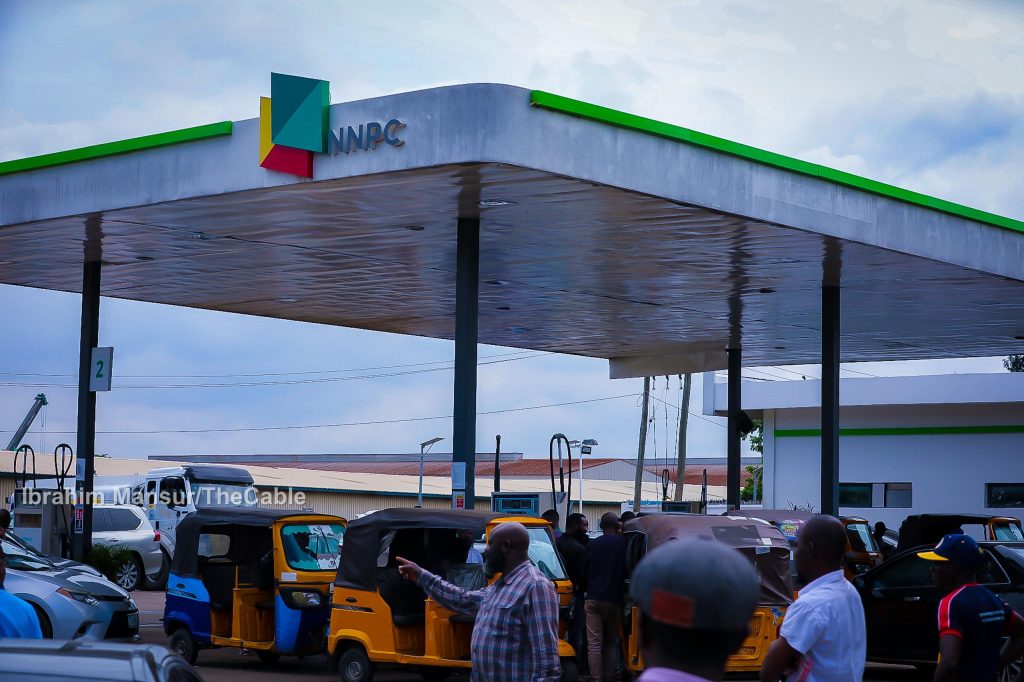
Announced on Thursday, October 8, 2026, the arrangement will allow the Nigerian National Petroleum Company Limited (NNPC) to forgo its retail profit margin and sell petrol at cost at its filling stations, with priority given to public transport operators.
The Presidency insists that the initiative does not restore the blanket petrol subsidy removed in May 2023. Critics, however, want the government to explain how much motorists will save, how the programme will be funded and what will happen when the 30-day period ends.
How the Federal Government’s Petrol Discount Will Work
Finance Minister and Coordinating Minister of the Economy Taiwo Oyedele announced the initiative as part of a wider package intended to cushion Nigerians against rising energy costs.
Under the arrangement, NNPC will temporarily forgo its retail profit margin on petrol sold at its filling stations. The company will offer the product at cost, with commercial transport operators receiving priority.
The government has also proposed a ceiling of ₦1,350 per litre on petrol’s ex-gantry or landing cost. Under this proposal, refiners and importers would absorb costs above the ceiling and recover the difference later if market conditions improve.
The government says the arrangement aims to reduce sudden price increases and provide greater stability for consumers.
However, Oyedele has not confirmed the exact discount motorists will receive per litre. He said the amount would depend on NNPC’s operating costs and margins.
This means Nigerians should not assume that every litre sold at an NNPC station will automatically attract a fixed ₦60 discount. The actual savings will depend on how the company implements the arrangement and the applicable selling price.
The Presidency has also announced other measures, including increased funding for cash transfers to vulnerable households, subsidised credit, expanded compressed natural gas (CNG) deployment and efforts to reduce excessive road taxes and levies that increase transport and logistics costs.
The government says these measures are intended to provide broader relief without returning to the former nationwide petrol subsidy system.
Why Atiku Abubakar Rejected the Plan
Former Vice-President Atiku Abubakar has criticised the initiative, describing it as a temporary intervention that fails to address the underlying economic pressures facing Nigerians.
In a statement issued through Phrank Shaibu, Director of Strategic Communication of the African Democratic Congress Presidential Campaign Council, Atiku questioned the sustainability of a discount that would last only 30 days.
He also raised concerns about limiting the arrangement to NNPC filling stations, the absence of a confirmed discount per litre and the lack of guarantees that transport operators would pass their savings on to passengers.
Atiku argued that Nigerians need lasting relief rather than a short-term reduction followed by a possible return to higher prices.
He also renewed his call for production support tied to locally refined petrol, with safeguards to ensure that consumers benefit.
The former vice-president’s criticism reflects a broader political disagreement over how the government should manage petrol prices following subsidy removal.
Obidient Movement Questions the Timing
The Obidient Movement has also criticised the announcement, questioning why the government is introducing the measure more than three years after removing the petrol subsidy.
In a statement by its Director of Media and Communications, Onyeka Dike, the movement argued that Nigerians have endured high fuel prices, increased transport costs, rising tuition fees and expensive food since the subsidy ended.
The group suggested that the approaching 2027 general elections raise questions about the timing of the intervention.
It called for sustainable measures to improve access to affordable fuel, food and education instead of temporary relief.
These are political criticisms, rather than proof of the government’s motive. The Federal Government maintains that its decision responds to global energy-market pressures and seeks to cushion households without reversing its economic reforms.
Makinde’s Campaign Organisation Calls the Discount Inadequate
The presidential campaign organisation associated with Oyo State Governor Seyi Makinde has also rejected the intervention.
The organisation, representing the Allied Peoples Movement (APM) presidential campaign, described the proposed reduction as inadequate compared with the increases Nigerians have faced in petrol prices.
Its Director of Strategic Communications, Richard Ihediwa, criticised the plan’s 30-day duration and its restriction to NNPC retail outlets.
The group also questioned whether a limited number of NNPC stations could adequately serve motorists across the country.
Its central argument is that Nigerians need a more substantial and sustained reduction in fuel costs, rather than a temporary measure introduced ahead of another election cycle.
Labour Leaders and Experts Question the Policy
The backlash extends beyond opposition politicians.
Trade Union Congress President Festus Osifo has questioned the government’s insistence that the intervention is not a subsidy. He argued that when a government limits a product’s price below its otherwise applicable cost, someone must absorb the difference.
Social Democratic Party presidential candidate Adewole Adeboye also criticised the policy’s design, questioning its legal basis, funding arrangements and long-term direction.
Their concerns highlight a key distinction: the government may describe the arrangement as a commercial-margin adjustment, but its economic implications will depend on how the discount and proposed price ceiling operate in practice.
Petroleum economist Wumi Iledare has offered a more conditional assessment. He said a targeted and temporary intervention could make economic sense if it reduces transport costs and helps prevent increases in the prices of goods and services.
However, he warned that the programme could become another form of subsidy if NNPC sells below its economic cost and the government later reimburses the company or assumes the resulting liabilities.
Iledare called for the government to disclose the discount per litre, the volume of petrol covered, the funding source, the maximum financial exposure and the arrangements for ensuring that passengers benefit from lower transport costs.
He also called for independent auditing, clear monitoring and an explicit exit plan.
What Does This Mean for Motorists and Transport Fares?
For motorists, the immediate question is simple: Will petrol become cheaper, and by how much?
The government has not yet confirmed a fixed discount per litre. The proposed ₦1,350 benchmark concerns the ex-gantry or landing cost of petrol; it is not a guarantee that every filling station will sell petrol at ₦1,350 per litre.
The discount is also tied to NNPC retail outlets, rather than a confirmed nationwide reduction across every independent marketer.
Commercial transport operators are expected to receive priority, but the government will need an effective monitoring system to ensure that any savings translate into lower fares for passengers.
Even if operators buy fuel more cheaply, they may not automatically reduce fares unless the government establishes a clear mechanism to pass on the savings.
The initiative’s impact will therefore depend on its implementation, the size of the actual discount, the availability of petrol and the response of transport operators.
Will This Bring Back Petrol Subsidy?
The government says no.
The Presidency argues that the arrangement differs from the former blanket subsidy because NNPC will forgo its retail margin rather than rely on a general government payment to keep petrol prices artificially low.
The proposed landing-cost ceiling is intended to smooth price fluctuations, with refiners and importers absorbing temporary increases and recovering losses when costs decline.
However, the distinction will depend on the programme’s actual financial arrangements.
If NNPC absorbs the discount entirely from a clearly defined commercial margin, the government’s argument would be easier to establish. If public funds or future government payments cover losses, the intervention could carry subsidy-like costs even if officials use a different label.
Transparency over funding, liabilities and the eventual cost to taxpayers will be essential to resolving the debate.
What Happens After the 30 Days?
The government has said it will review the arrangement after the initial 30-day period. It has also expressed hope that other marketers will voluntarily reduce their margins.
But questions remain about whether the discount will be extended, how prices will respond when the intervention ends and whether the proposed landing-cost ceiling will remain in place.
The government’s broader package includes CNG expansion, targeted assistance for vulnerable households, subsidised credit and efforts to reduce transport-related levies. These measures may help ease some cost pressures, but their effectiveness will depend on implementation and measurable results.
For now, the government faces a practical test: demonstrate that the intervention provides meaningful relief while keeping its costs and financial risks transparent.
The Bigger Question: Temporary Relief or Lasting Solution?
The controversy over the 30-day petrol discount reflects a wider disagreement about the consequences of subsidy removal and the best way to protect households from high living costs.
The Federal Government says it wants to maintain market-based petrol pricing while reducing sudden price increases and supporting vulnerable Nigerians.
Opposition groups argue that the intervention is too limited and raises questions about its timing, while labour leaders and energy experts want clearer explanations of how the programme will be financed and monitored.
Ultimately, the measure’s success will depend less on what the government calls it and more on what Nigerians experience.
How much will motorists actually save? Will transport fares fall? Who will bear the cost if petrol prices rise above the proposed ceiling? And what happens when the 30 days end?
Those are the questions the government will need to answer as the programme unfolds.
For Nigerians struggling with fuel and transport costs, the decisive measure will be whether the intervention delivers tangible savings without creating new financial burdens later.