
Nigeria has taken a major step toward cleaner air transport with the launch of a national Sustainable Aviation Fuel (SAF) Programme, an initiative designed to reduce carbon emissions and position the country as a leader in Africa’s emerging green aviation industry.
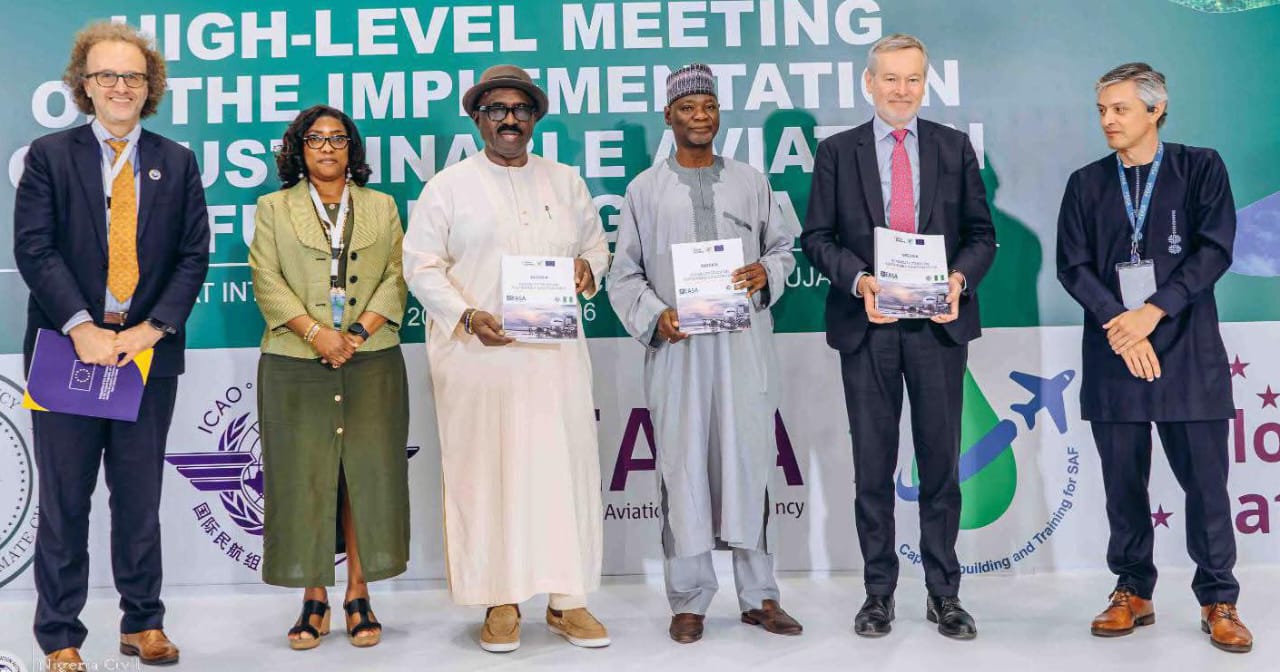
The Federal Government officially inaugurated the National High-Level Sustainable Aviation Fuel (SAF) Steering Committee during a high-profile event held at the International Conference Centre (ICC) in Abuja.
The ceremony also featured the unveiling of the National Sustainable Aviation Fuel Feasibility Study and the ICAO-supported Sustainable Aviation Fuel Business Implementation Study, key documents expected to guide Nigeria’s transition to environmentally friendly aviation.
The programme was organised by the Nigeria Civil Aviation Authority (NCAA) in collaboration with the International Civil Aviation Organization (ICAO), the European Union (EU) and the European Union Aviation Safety Agency (EASA).
Keyamo: Green Aviation Offers Huge Economic Opportunities
Speaking at the inauguration, the Minister of Aviation and Aerospace Development, Festus Keyamo (SAN), described the initiative as a landmark achievement in Nigeria’s efforts to build a modern, competitive and environmentally sustainable aviation sector.
Represented by the Director of Air Transport Management, Mohammed Ahmed Tijani, the minister said the newly inaugurated steering committee would coordinate the implementation of the country’s Sustainable Aviation Fuel programme and provide strategic leadership for its successful execution.
According to him, embracing Sustainable Aviation Fuel presents enormous opportunities for Nigeria beyond environmental protection.
He noted that the initiative could attract fresh investments, create employment opportunities, strengthen the country’s energy security and stimulate growth across the agriculture, manufacturing and energy sectors.
Keyamo urged members of the committee to work collaboratively in delivering a programme capable of transforming Nigeria’s aviation industry.
Nigeria Moves From Planning to Action
Director-General of the NCAA, Capt. Chris Najomo, described the launch as a defining moment in Nigeria’s journey toward achieving net-zero emissions in aviation.
He explained that the feasibility study was developed under the ICAO Assistance, Capacity-building and Training for Sustainable Aviation Fuels (ACT-SAF) Programme, with financial support from the European Union and technical assistance from EASA.
Najomo said the study confirms Nigeria has abundant raw materials that can support commercial production of Sustainable Aviation Fuel, creating new opportunities for local industries while reducing dependence on conventional aviation fuel.
He reaffirmed the NCAA’s commitment to coordinating all stakeholders and serving as the secretariat of the steering committee to ensure the successful implementation of the programme.
Towards a Cleaner Aviation Future
The Federal Government believes the Sustainable Aviation Fuel Programme will help Nigeria meet global climate commitments, significantly reduce aviation-related carbon emissions and unlock investment opportunities in the country’s growing green economy.
Industry experts also expect the initiative to enhance Nigeria’s competitiveness in the global aviation sector while supporting long-term economic diversification through clean energy innovation.
About the Author