
Nigeria has taken a major step towards expanding its non-oil exports following the signing of a new protocol with China governing the export of wild aquatic products from Nigeria to the Chinese market.
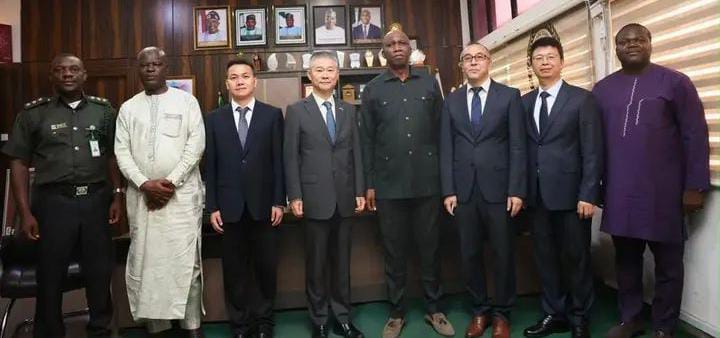
The agreement was signed on Thursday, August 13, 2026, at the Federal Ministry of Justice in Abuja by the Nigeria Agricultural Quarantine Service (NAQS), with senior Nigerian and Chinese officials, industry stakeholders and development partners in attendance.
The new protocol establishes the quarantine and technical requirements that Nigerian exporters must meet before wild aquatic products can be shipped to China.
Representing the Attorney-General of the Federation and Minister of Justice, Lateef Fagbemi, SAN, the Director of the Department of International and Comparative Law, Mrs Janet S. Awanen, said the agreement had gone through extensive negotiations and legal scrutiny to ensure that its provisions were consistent with Nigeria’s laws and national interests.
She said the agreement could generate wider economic benefits through increased trade, job creation and greater value addition within Nigeria’s fisheries sector.
NAQS: Agreement Opens New Export Opportunities
The Comptroller-General of NAQS, Dr Vincent Isegbe, described the signing as a major milestone in Nigeria’s efforts to diversify its export base and expand access to international markets.
Isegbe said the agreement was the product of more than four years of technical discussions between Nigerian and Chinese authorities aimed at creating a pathway for Nigerian wild aquatic products to enter the Chinese market.
He explained that NAQS, as the Federal Government’s designated authority for the inspection and certification of animal and aquatic products, played a central role in negotiating and establishing the framework.
According to him, the protocol provides the regulatory and technical foundation for ensuring that aquatic products exported from Nigeria meet the required standards for safety, quality and traceability.
He said the development aligns with the Federal Government’s efforts under President Bola Ahmed Tinubu’s Renewed Hope Agenda to increase non-oil exports and strengthen Nigeria’s participation in international trade.
China Welcomes Increased Agricultural Trade
The Chinese Ambassador to Nigeria, Yu Dunhai, welcomed the conclusion of the negotiations, describing the agreement as another important development in the growing relationship between Nigeria and China.
The ambassador expressed confidence in Nigeria’s regulatory institutions and said the protocol would provide fresh opportunities for increased cooperation in agriculture and aquatic-product trade.
He also encouraged Nigerian exporters to take advantage of China’s zero-tariff arrangements and Green Channel policy, which are designed to facilitate faster clearance of agricultural products from African countries.
A representative of the Nigeria-China Strategic Partnership Office also described the agreement as evidence of the expanding economic relationship between the two countries.
She said improving access to the Chinese market for Nigerian agricultural products remained an important component of bilateral cooperation, noting that the new protocol could stimulate investment, employment, value addition and foreign exchange earnings.
Boost for Nigeria’s Seafood Export Market
The agreement is expected to give Nigerian fisheries operators a structured pathway into China’s large consumer market while requiring exporters to comply with established sanitary, hygiene, quarantine and traceability standards.
For Nigeria, the development could provide a new avenue for strengthening the fisheries value chain, increasing export revenues and reducing reliance on crude oil as the country’s dominant source of foreign exchange.
With the protocol now signed, attention is expected to shift towards implementation and ensuring that Nigerian exporters have the capacity to meet China’s regulatory requirements.
The agreement therefore represents an important opportunity for Nigeria to expand its presence in the international seafood market and deepen agricultural trade with one of its major global economic partners.
About the Author