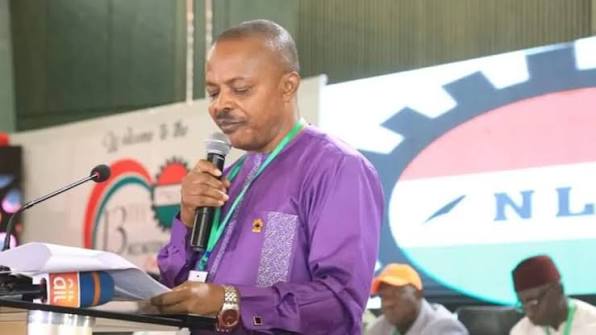
As Nigeria marks its 66th Independence Anniversary, the Nigeria Labour Congress (NLC) has renewed pressure on the Federal Government to address the rising cost of living.
The labour union is demanding a new national minimum wage for 2027, an immediate nationwide wage award and a reduction in petrol prices.
NLC President Joe Ajaero made the demands in the union’s Independence Day statement issued on September 30, 2026. The statement warned that rising prices have continued to erode workers’ purchasing power.
Why the NLC Is Calling for a New Minimum Wage
Nigeria’s current minimum wage stands at ₦70,000. The NLC argues that inflation and the rising cost of essential goods have significantly reduced its real value.
According to the union, workers now face higher expenses for food, transportation, rent, school fees and other basic needs.
The NLC wants the Federal Government to immediately establish a tripartite committee involving government, labour and employers to negotiate a new wage standard for 2027.
It wants the process completed before the end of 2026.
Why Petrol Prices Are Central to the Dispute
The NLC also wants the government to reduce petrol prices.
The union said petrol now sells for about ₦1,430 per litre or more in major cities, with prices reportedly higher in some remote areas.
Labour argues that expensive petrol affects more than motorists. Higher fuel costs raise transportation expenses, which then affect the prices of food, rent, education and other household necessities.
The union therefore wants the government to break what it describes as the link between high fuel prices, transportation costs and rising household expenses.
NLC Wants Nationwide Wage Award
Beyond a new minimum wage, the NLC is asking the government to introduce an immediate nationwide wage award for workers at the federal, state and local government levels.
The union describes the measure as an emergency intervention designed to cushion workers against declining real incomes.
This means the NLC is seeking short-term relief while negotiations for a new minimum-wage framework take place.
The Subsidy Removal Question
The labour union also questioned how the government has used savings from the removal of the petrol subsidy.
The NLC said Nigerians were told that subsidy removal would free resources for infrastructure and social services. It now wants greater transparency over how those savings have been used.
The union also criticised Nigeria’s continued dependence on imported refined petroleum despite its large crude-oil production capacity.
What the NLC’s Demands Could Mean for Workers
If the Federal Government opens negotiations for a new minimum wage, the process could become a major economic discussion as Nigeria approaches 2027.
A new wage agreement would have implications for workers, employers and government budgets.
A petrol price reduction, meanwhile, could affect transportation costs and household spending if lower pump prices translate into lower transport fares and reduced operating costs.
However, the NLC’s demands remain demands from organised labour. They do not mean that the Federal Government has accepted the proposed measures.
NLC Raises Wider Concerns
The union’s Independence Day statement went beyond wages and petrol.
It also called for lower government spending, greater transparency in public finances, stronger investment in roads, hospitals and schools, and more opportunities for young Nigerians.
The NLC also raised concerns about insecurity and its effect on economic activity, arguing that workers, farmers, teachers and other Nigerians need a safer environment to live and work.
What Happens Next?
The immediate issue to watch is whether the Federal Government responds to the NLC’s calls for a new wage negotiation process, a nationwide wage award and lower petrol prices.
The proposed 2027 minimum-wage negotiations could become one of the major labour and economic issues facing Nigeria before the end of 2026.
For millions of workers, the central question is simple: will wages rise fast enough to keep pace with the cost of living?
That question could shape the next phase of discussions between the Federal Government, employers and organised labour.