In this article
- What Happened to the Aircraft?
- 32 People Were on Board
- What Type of Aircraft Was It?
- Why Was a Military Aircraft Flying From Benin to Lagos?
- What Caused the Crash?
- NSIB Offers Technical Support
- Tinubu Orders Full Investigation
- What We Know — And What We Don’t Know
- What we know
- What remains unclear
- Why the Investigation Matters
- What Happens Next?
- Bottom Line
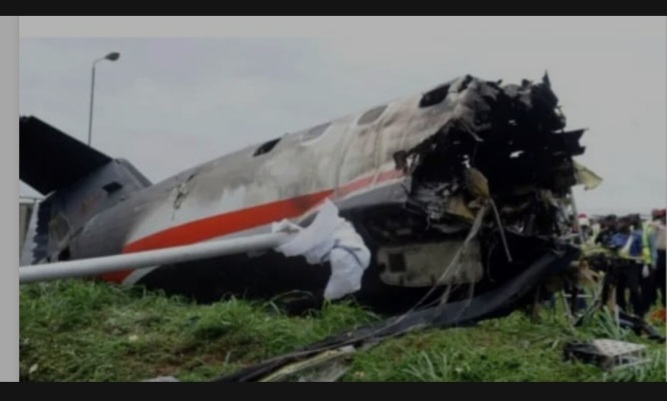
Nigeria is mourning after a Nigerian Air Force aircraft crashed in Igbokoda, Ondo State, killing all 32 people reportedly on board.
The aircraft, an ATR-42 with tail number NGR 931, was travelling from Benin City in Edo State to Lagos on Monday, October 5, when air traffic controllers lost contact with it.
The aircraft later crashed near the Naval Base in Igbokoda, in Ilaje Local Government Area of Ondo State.
Preliminary information indicated that 25 passengers and seven crew members were aboard.
President Bola Tinubu has ordered a thorough investigation into the crash and expressed condolences to the families of those who died.
What Happened to the Aircraft?
According to information released by the Ministry of Aviation and Aerospace Development, air traffic controllers lost contact with the aircraft at about 9:13 a.m. on Monday.
Attempts to establish radio communication with the aircraft reportedly failed.
Authorities later confirmed that the aircraft had crashed close to the Naval Base in Igbokoda, where its wreckage was located.
The Nigerian Air Force said it immediately activated a search-and-rescue operation in coordination with relevant authorities and emergency response agencies.
The crash site was reportedly in a difficult, swampy area near a river, creating additional challenges for responders.
32 People Were on Board
The aircraft was carrying 32 people — 25 passengers and seven crew members.
Initial reports focused on the search-and-rescue operation, and authorities had not immediately released a casualty figure.
However, President Tinubu subsequently confirmed that the people aboard had died.
The identities of the victims had not been publicly released at the time of the latest official updates.
The presidency described the incident as a painful loss for the Armed Forces and extended condolences to the families, colleagues and the Nigerian Air Force.
What Type of Aircraft Was It?
The aircraft was an ATR-42, a twin-engine turboprop aircraft operated by the Nigerian Air Force.
The ATR-42 aircraft operated by the NAF have been configured primarily for maritime patrol and Intelligence, Surveillance and Reconnaissance (ISR) missions.
Available reporting indicates that Nigeria had two ATR-42-500MP aircraft, identified as NAF 930 and NAF 931.
The aircraft involved in Monday’s crash was identified as NGR 931.
The aircraft was reportedly delivered to Nigeria as part of a 2007 deal and had undergone major maintenance in Germany before returning to service.
Why Was a Military Aircraft Flying From Benin to Lagos?
The Nigerian Air Force described the journey as a routine mission from Benin to Lagos.
Authorities have not yet provided detailed information about the specific nature of the mission or why the aircraft was carrying the 25 passengers.
That information could become important to the investigation as officials reconstruct the aircraft’s final flight.
For now, there is no official conclusion that the crash was caused by mechanical failure, weather, human error or any other specific factor.
What Caused the Crash?
The cause remains unknown.
That is one of the most important questions now facing investigators.
The aircraft disappeared from communication before crashing, but that fact alone does not establish what happened inside or outside the aircraft.
Investigators will need to examine the aircraft’s maintenance history, flight data, cockpit recordings, weather conditions, communications with air traffic control, crew actions and other evidence from the crash site.
The Nigerian Air Force has been directed to conduct a thorough investigation into the cause of the accident.
NSIB Offers Technical Support
The Nigerian Safety Investigation Bureau has offered to assist with the investigation.
The NSIB explained that because the aircraft was military-operated, the responsibility for investigating the accident rests with the military authority.
However, the bureau said it can provide investigators and technical support if the Nigerian Air Force formally invites it.
That support could include the recovery and analysis of flight data and cockpit voice recordings, which could provide critical information about what happened during the aircraft’s final moments.
This could become an important part of determining whether the crash resulted from an aircraft problem, operational issue, environmental conditions or another factor.
Tinubu Orders Full Investigation
President Bola Tinubu has directed the Nigerian Air Force to immediately commence a thorough investigation.
The President also commended the first responders and the Ondo State Government for their response at the crash site.
Tinubu said the investigation should help establish the cause of the accident and prevent similar occurrences in the future.
The response also underscores the seriousness of the incident for Nigeria’s military aviation community.
What We Know — And What We Don’t Know
At this stage, several facts have been established.
What we know
- The aircraft was a Nigerian Air Force ATR-42.
- Its tail number was NGR 931.
- It was travelling between Benin and Lagos.
- Air traffic controllers lost contact with it at about 9:13 a.m.
- The aircraft crashed near the Naval Base in Igbokoda, Ondo State.
- 25 passengers and seven crew members were aboard.
- President Tinubu confirmed the deaths of those on board.
- A formal investigation has been ordered.
- The NSIB has offered technical assistance if formally invited.
What remains unclear
Several key questions remain unanswered:
- What caused the aircraft to crash?
- Was there a mechanical or technical problem?
- What was the aircraft’s condition before take-off?
- What happened during the final minutes of the flight?
- What information will the flight-data and cockpit recordings reveal?
- Who exactly were the passengers and crew members?
- Were there any warnings or abnormalities before contact was lost?
These questions should be answered by the investigation rather than speculation.
Why the Investigation Matters
The investigation will go beyond determining what caused one aircraft to crash.
It could also reveal whether there were broader issues involving aircraft maintenance, operational procedures, crew coordination, equipment, weather or military aviation safety.
For the families of those who died, the investigation could also provide answers about what happened to their loved ones.
For the Nigerian Air Force, its findings could determine whether changes are needed to prevent another tragedy.
What Happens Next?
The immediate focus will be on the recovery and identification of the victims, securing the crash site and gathering evidence.
Investigators will then work to reconstruct the aircraft’s final journey and establish the circumstances that led to the crash.
The Nigerian Air Force is expected to provide further information as the investigation progresses.
The identities of the victims and additional details about the flight may also be released through official channels.
Until investigators publish their findings, claims about the exact cause of the crash should be treated with caution.
Bottom Line
The Ondo crash is now one of the most serious recent incidents involving a Nigerian military aircraft.
What began with the loss of communication with an ATR-42 carrying 32 people ended with the confirmation of the deaths of everyone aboard.
The immediate task is to establish what happened, why it happened and whether anything could have prevented it.
For now, the cause remains under investigation.