In this article
- Who Organised and Hosted Oyo Waste Summit 3.0?
- Why Food Waste Took Centre Stage
- From Conference Hall to Community
- What Happened at the University of Ibadan?
- Young Nigerians Put Waste Solutions on Display
- Government, Industry and Recyclers at the Same Table
- The Waste-to-Wealth Conversation
- Eco-Faaji Brings Sustainability Into Social Life
- From Plastic Waste to Food Waste
- Why Oyo Waste Summit 3.0 Matters
- What Comes Next?
Ibadan recently became a meeting point for environmentalists, government officials, recyclers, sustainability advocates, businesses, academics and young innovators as the Oyo Waste Summit 3.0 brought the conversation on waste management into sharper focus.
Held on September 23 and 24, 2026, the two-day summit took place at the University of Ibadan and Adamasingba Stadium, Ibadan, under the theme “Food Waste: Local Action as the Foundation of Global Change.” The event was held in alignment with activities marking World Cleanup Day.
But this year’s summit was not limited to speeches and panel discussions. It combined policy conversations, technical presentations, exhibitions, youth innovation and a practical community recyclables buy-back programme designed to demonstrate how discarded materials can retain economic value.
Who Organised and Hosted Oyo Waste Summit 3.0?
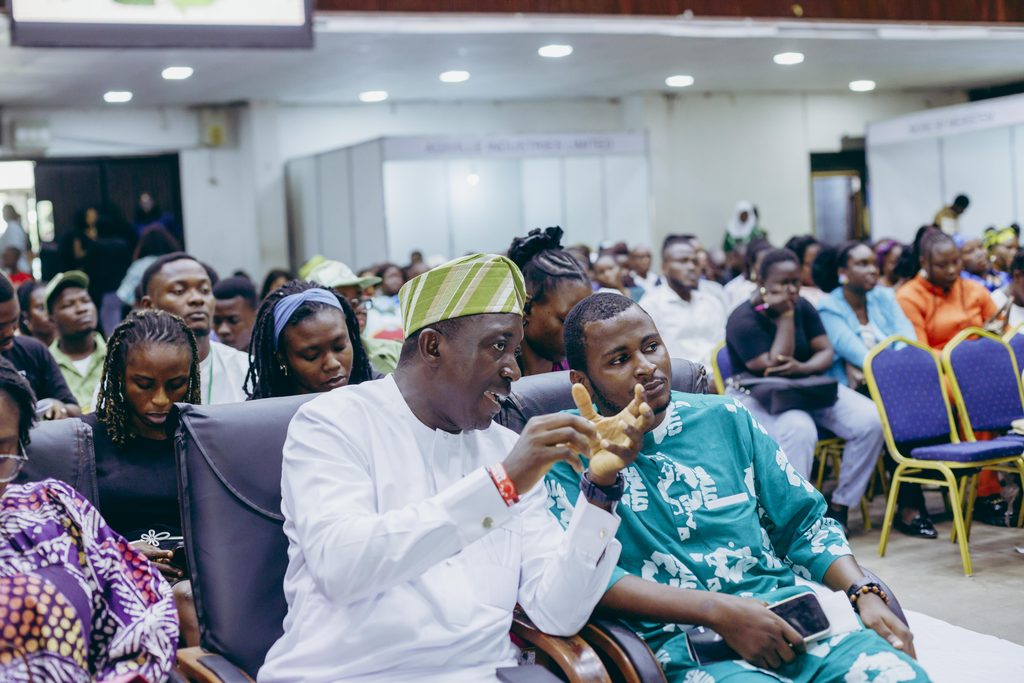
The summit was convened by Mr Victor O. Oyejide, the Oyo State Coordinator of the Recyclers Association of Nigeria (RAN).
Oyejide has been at the centre of the Oyo Waste Summit platform, which brings stakeholders across the waste value chain together to discuss practical solutions to waste management, recycling and the development of a circular economy in Oyo State. The official summit programme identifies him as the Convener of Oyo Waste Summit and Oyo State Coordinator of RAN.
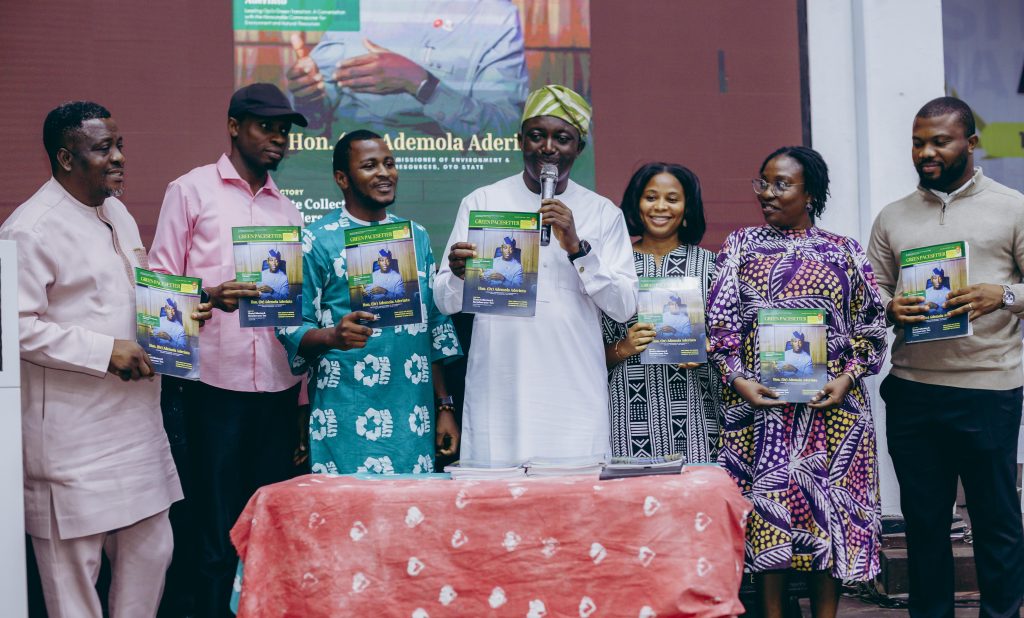
The Host of the summit was Hon. (Dr) Ademola Aderinto, the Commissioner for Environment and Natural Resources, Oyo State.
Aderinto was also listed among the summit’s technical contributors, with a presentation focusing on industry innovations in managing post-consumer food packaging materials.
The summit brought together the public sector, private companies, recyclers, environmental organisations, academics, civil society groups and other players within the waste value chain.
Why Food Waste Took Centre Stage
Food waste was the central theme of the third edition.
The organisers sought to move the conversation beyond simply disposing of waste and examine how food waste and related materials can be prevented, recovered, reused or converted into value.
Discussions explored the relationship between waste management, circular economy, green jobs, recycling, policy and private-sector opportunities.
One key message from participants was that solving Nigeria’s waste challenge requires more than collection and disposal. It also requires systems that preserve the economic value of materials that would otherwise end up in dumpsites, drains and other inappropriate locations.
From Conference Hall to Community
The second day provided perhaps the clearest demonstration of the summit’s practical approach.
At Adamasingba Stadium, residents participated in a recyclables buy-back programme after awareness activities around the Sabo and Adamasingba communities.
Residents brought materials such as plastics, bottles, nylons, papers, textiles and other recyclable items. The materials were weighed and collected, while participants received cash, food items or other incentives.
The exercise demonstrated a simple but important principle: waste can have value when it is properly separated and connected to a functioning recycling system.
The summit’s organisers described the activity as a way of demonstrating how a circular economy can work beyond the conference room.
What Happened at the University of Ibadan?
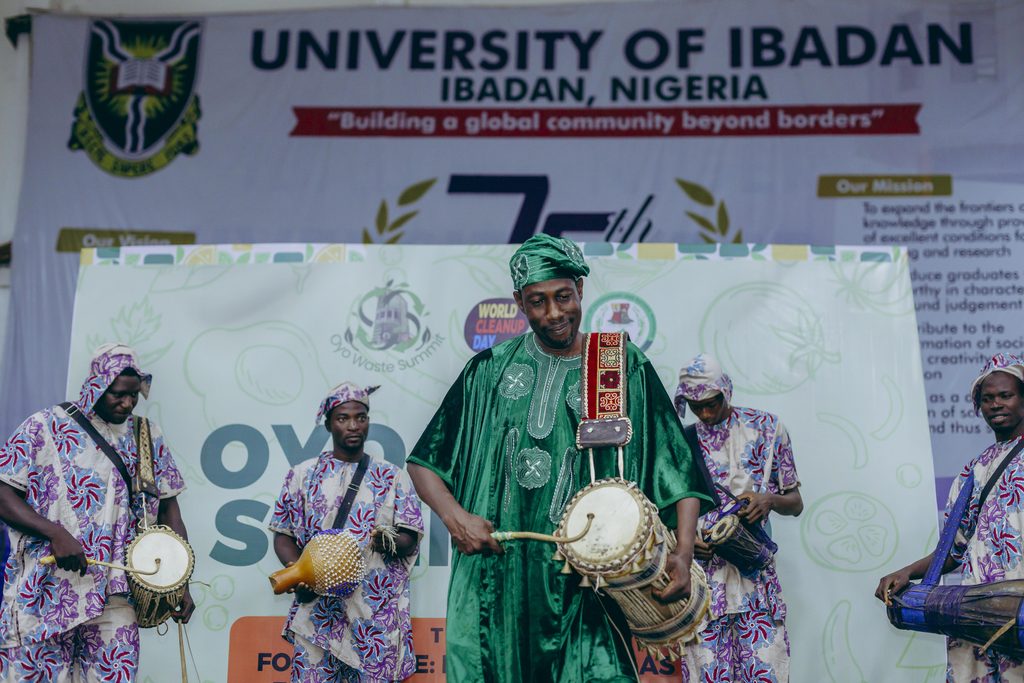
The first day at Trenchard Hall, University of Ibadan, featured keynote and short-paper presentations, panel sessions, stakeholder discussions, exhibitions and a waste innovation competition.
The programme brought together voices from government, industry, academia and the recycling sector.
Participants discussed issues including food waste, post-consumer packaging, recycling, circular economy opportunities, environmental policy and the role of young people in building sustainable businesses.
The summit also featured a Circular Economy Marketplace/Exhibition, allowing organisations and entrepreneurs to showcase products, services and innovations connected to waste management and sustainability.
Young Nigerians Put Waste Solutions on Display
Youth participation was another important feature of the summit.
Secondary school students took part in the Waste Innovation Competition, presenting ideas on how waste materials can be reused or converted into useful products.
Post-event participants highlighted examples of student innovations involving discarded school uniforms, orange peels and textile waste.
The emphasis on young innovators reflected a wider message from the summit: environmental sustainability is not only a government responsibility. Young people can also become innovators, entrepreneurs and problem-solvers within the emerging green economy.
Government, Industry and Recyclers at the Same Table
The summit also provided a platform for different parts of the waste ecosystem to meet.
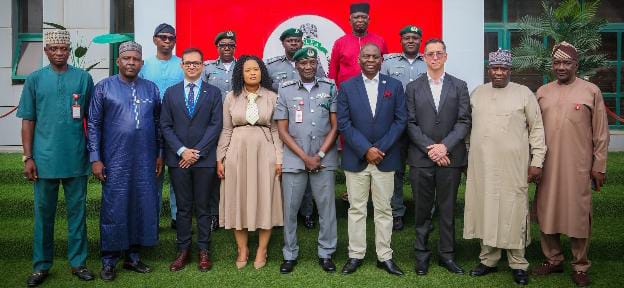
Participants included representatives of the Oyo State Ministry of Environment and Natural Resources, the Oyo State Waste Management Agency (OYOWMA), the Recyclers Association of Nigeria, private-sector organisations, environmental groups and other sustainability-focused institutions.
Among the organisations represented in discussions and participant accounts were the Food and Beverage Recycling Alliance (FBRA), Nigeria Bottling Company, Seven-Up Bottling Company, CHI Limited and other players in the waste and recycling ecosystem.
That mix matters because effective waste management requires cooperation across the entire chain — from households and businesses that generate waste to government agencies, recyclers and companies that can use recovered materials.
The Waste-to-Wealth Conversation
A major takeaway from the summit was the need to look at waste not only as an environmental problem but also as an economic opportunity.
Participants discussed the practical requirements for building viable waste-to-wealth businesses, including the availability and consistency of recyclable materials, collection costs, material quality and the existence of customers willing to pay for recycled products.
That approach shifts the conversation from “How do we dispose of waste?” to a more commercially relevant question:
“What can this waste become?”
For a state like Oyo, that question could have implications for employment, entrepreneurship, recycling infrastructure and environmental protection.
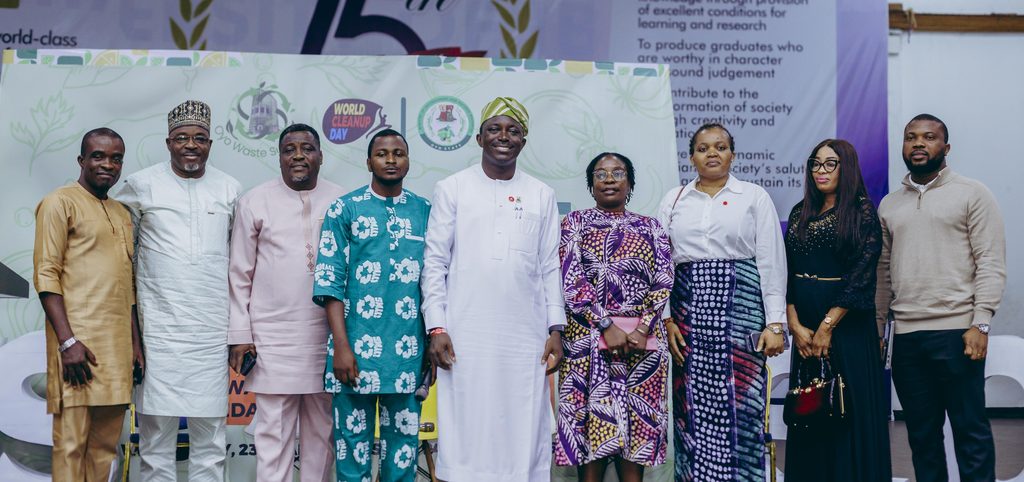
Eco-Faaji Brings Sustainability Into Social Life
The summit also featured Eco-Faaji, a sustainability-themed social event designed to connect environmental awareness with Nigeria’s social and cultural lifestyle.
The idea was to show that sustainability does not have to remain a technical conversation among environmental professionals.
Food waste, disposable packaging and recycling are issues that affect parties, weddings, restaurants, hotels, markets and everyday household activities.
Bringing sustainability into those spaces can help make environmental responsibility part of everyday behaviour.
From Plastic Waste to Food Waste
Oyo Waste Summit 3.0 also represents an evolution of the summit itself.
The maiden edition focused on plastic waste and proper waste management, while the second edition explored fashion waste through a “Trashion” concept.
The third edition shifted attention to food waste, while retaining the wider focus on recycling, circular economy and waste-to-wealth opportunities.
This progression allows the summit to examine different aspects of Oyo State’s waste challenge from year to year.
Why Oyo Waste Summit 3.0 Matters
The real test of an environmental summit is what happens after participants leave the venue.
Oyo Waste Summit 3.0 attempted to bridge that gap by connecting discussions at the University of Ibadan with a practical community intervention at Adamasingba.
The buy-back programme showed residents that separating waste can produce immediate value.
It also brought residents, recyclers, government representatives, volunteers and private-sector stakeholders into one practical activity.
That model could become increasingly important as Oyo State and other Nigerian cities search for ways to improve waste collection, recycling and public participation.
What Comes Next?
The organisers have already unveiled the next stage of the summit, with Oyo Waste Summit 4.0 announced at the close of the third edition.
For Convener Victor O. Oyejide, the continuing challenge will be to sustain the platform’s stakeholder network and turn the ideas generated at the summit into practical interventions.
For Host Hon. (Dr) Ademola Aderinto and the Oyo State environmental authorities, the bigger task remains building systems that encourage residents and businesses to participate in responsible waste management.
And for residents, the lesson from Oyo Waste Summit 3.0 is perhaps the simplest:
Don’t let your waste go to waste.
The third edition showed that waste management can be a conversation about cleaner communities, but it can also be a conversation about jobs, entrepreneurship, innovation and economic value.
That is where the waste-to-wealth idea begins to move from slogan to practice.