The Nigerian Senate has advanced a bill seeking to strengthen the regulatory powers of the National Universities Commission (NUC), with proposed changes targeting accreditation, academic standards and university governance.
The bill, titled National Universities Commission Act, 2026 (SB. 1056), scaled second reading during plenary on Thursday. It was sponsored by Senate Leader Opeyemi Bamidele and presented by Senate Chief Whip Mohammed Monguno.
The proposed legislation seeks to repeal and re-enact the existing NUC Act to reflect changes in Nigeria’s higher education system.
Why the Senate Wants a New NUC Law
Leading the debate, Monguno said the existing law had become outdated following the expansion of private universities, technological advancement, globalisation and changing national development priorities.
He explained that the bill would modernise accreditation processes, strengthen the enforcement of academic standards and improve the commission’s operational efficiency.
According to him, the proposed law would also promote research and innovation while protecting institutional autonomy.
Other provisions seek to update the composition and functions of the NUC governing board, introduce digital tools for greater transparency and establish frameworks for international partnerships and diversified funding.
Senator Calls for Stronger Powers Over Private Universities
Contributing to the debate, Senator Victor Umeh, who represents Anambra Central, called for stronger enforcement powers to address alleged violations of university governance standards.
Umeh alleged that some private universities had adopted corporate management structures involving managing directors and executive directors, which he said could conflict with existing regulatory requirements.
He argued that such arrangements could create administrative confusion and weaken the NUC’s ability to ensure compliance with laws governing university administration.
The senator urged lawmakers to empower the commission to issue binding directives to universities and enforce compliance with statutory requirements.
He also called for effective enforcement mechanisms to prevent institutions from undermining regulatory authority through prolonged litigation.
Akpabio Orders Investigation Into University Governance Allegations
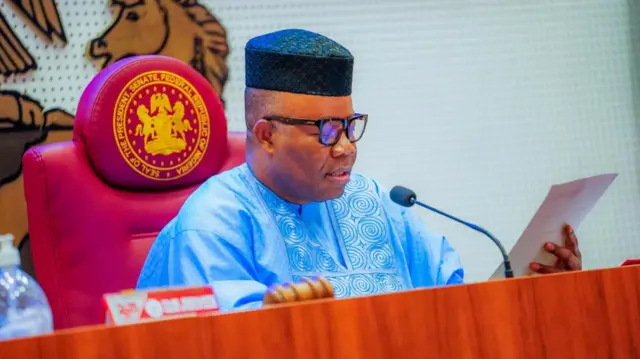
Senate President Godswill Akpabio said the proposed legislation could help align Nigeria’s university system with global best practices and internationally recognised academic standards.
During the debate, Umeh cited a university in Anambra as an example of the governance concerns requiring further investigation.
He alleged that the institution’s managing director exercised powers over the appointment and removal of vice-chancellors without following the procedures prescribed by the applicable legal framework.
The allegations have not been established as findings of an investigation.
Akpabio said the claims required further scrutiny and warned that weaknesses in university governance could undermine public confidence in Nigerian academic qualifications and the credibility of university certificates.
He consequently urged the Senate Committee on Basic and Tertiary Education to investigate the institution’s management structure and determine whether its practices complied with relevant laws.
The Senate President also called for action against institutions found to be operating outside the law, subject to investigations and a review of the evidence.
What Happens Next?
Following the second reading, the Senate referred the bill to the Senate Committee on Tertiary Institutions and TETFund for further legislative consideration.
The committee was given four weeks to examine the proposed legislation and submit its report to the Senate.
The bill has not yet become law. It must undergo further legislative consideration before any proposed changes can take effect.
What the Proposed NUC Act Could Mean for Nigerian Universities
If passed and enacted, the bill could give the NUC a stronger legal framework for regulating universities and other degree-awarding institutions across Nigeria.
The proposed changes could affect accreditation, institutional governance, regulatory compliance and the enforcement of academic standards.
The outcome of the legislative process will determine the extent of the commission’s powers and the obligations universities will be required to meet under the new framework.
For students, parents and prospective university applicants, the central issue is whether stronger regulation will improve institutional accountability and help protect the credibility of Nigerian university qualifications.