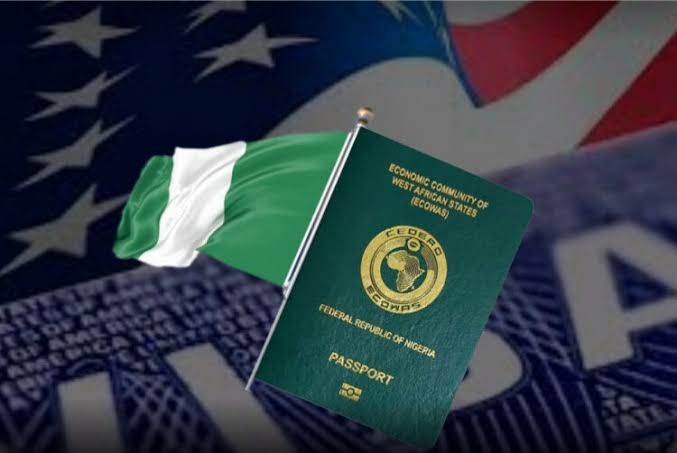
Nigerians seeking to travel to the United States continue to face visa restrictions introduced under a US presidential proclamation that took effect on January 1, 2026.
The restrictions affect several popular visa categories, including visitor, student, exchange and immigrant visas.
However, the measures do not amount to a complete ban on Nigerians travelling to the United States. Applicants can still submit visa applications and attend interviews, although some may be ineligible for visa issuance or admission under the restrictions.
The US government introduced the measures under Presidential Proclamation 10998, citing concerns about national security, screening, vetting and information sharing.
Which Nigerian Visa Categories Are Affected?
The restrictions cover several categories commonly used by Nigerians travelling to the United States.
These include:
- B-1: Business visitor visa
- B-2: Tourism, family visits and medical treatment
- F: Academic student visa
- M: Vocational or non-academic student visa
- J: Exchange visitor visa
- Immigrant visas: Subject to the proclamation and its applicable exceptions
The restrictions apply to Nigerians who are outside the United States on the effective date and do not hold a valid US visa at that time.
Applicants may still submit applications and attend interviews. However, applying or attending an interview does not guarantee that a visa will be issued.
The US Mission in Nigeria announced the restrictions in December 2025, ahead of their January 2026 implementation.
Are Nigerians With Existing US Visas Affected?
Nigerians who held valid US visas before the restrictions took effect were not automatically affected by the proclamation.
The US government stated that visas issued before the January 1, 2026, effective date would not be revoked under the proclamation.
This means travellers with valid visas should not assume that their documents have become invalid simply because the restrictions were introduced.
However, possessing a visa does not guarantee admission. US border officials retain authority to determine whether a traveller can enter the country.
Travellers should confirm their visa validity and any applicable entry requirements before departure.
What About Nigerian Students?
The restrictions have raised concerns among Nigerians planning to study in the United States.
In February 2026, the US Embassy in Nigeria clarified that Nigerian students and exchange participants with valid F-1 and J-1 visas were not affected by the restriction order.
The clarification was particularly important for students already holding visas and preparing to travel for academic programmes or approved exchanges.
F-1 visas are generally used for academic studies, while J-1 visas cover approved exchange programmes.
However, prospective students who do not yet have visas should check their eligibility under the restrictions before making financial commitments.
Admission to a US university or exchange programme does not automatically guarantee visa issuance.
Why Did the United States Introduce the Restrictions?
The US government cited concerns involving national security, screening, vetting and information sharing.
It also referenced visa overstay rates and security challenges in Nigeria.
According to the US government, the restrictions were intended to address difficulties associated with verifying information and assessing applicants.
Nigeria is among the countries affected by the proclamation, alongside several other nations.
The measures have created additional uncertainty for Nigerians planning tourism, business visits, education and family travel to the United States.
Nigeria Had Earlier Raised Concerns Over US Visa Rules
The Federal Government of Nigeria previously expressed concern over changes to the US visa reciprocity schedule.
In July 2025, Nigeria said the United States had reduced the validity of certain non-immigrant visas, including B-1/B-2, F and J categories, to three months with single entry.
Nigeria said the changes placed additional burdens on travellers, students, businesspeople and families.
The government urged Washington to reconsider the decision, citing reciprocity and the longstanding relationship between both countries.
These visa-validity changes are separate from the later restrictions under Presidential Proclamation 10998.
What Nigerian Travellers Should Do
Nigerians planning to travel to the United States should take the following steps:
1. Check your visa category
Confirm whether your intended travel falls under B-1/B-2, F, M, J or an immigrant visa category affected by the restrictions.
2. Confirm your visa status
If you already hold a valid US visa, check its expiry date and whether it remains suitable for your intended travel.
3. Verify eligibility before applying
Applicants should confirm their eligibility under the current restrictions before paying application fees or making major travel commitments.
4. Check with the US Embassy
Use official US Embassy or Consulate information for the latest visa instructions and individual circumstances.
5. Avoid non-refundable bookings
Do not assume that a visa application, interview appointment or university admission guarantees approval or entry.
What Happens Next?
The restrictions remain an important consideration for Nigerians planning travel to the United States.
The immediate concern for prospective travellers is whether their visa category is affected and whether they qualify under the applicable rules or exceptions.
For students, business travellers and families, the restrictions could influence travel plans, application timing and costs.
The US government has not announced a general reopening of the affected visa categories in the information reviewed for this report.
Nigerians should therefore confirm the latest requirements before applying or travelling.
The bottom line: US visa restrictions affect several categories of Nigerian travellers, but they do not automatically invalidate existing visas or prohibit every Nigerian from entering the United States.
Travellers should check their individual circumstances rather than assume that all Nigerian passport holders face the same restrictions.