The Economic and Financial Crimes Commission (EFCC) has issued a fresh warning to religious leaders across Nigeria, cautioning them against diverting tithes, offerings, zakat and other funds belonging to churches and mosques into private businesses.
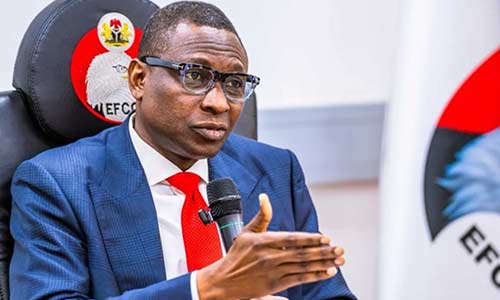
EFCC Chairman, Ola Olukoyede, gave the warning while speaking at the 2026 Second Council Meeting of the Nigeria Inter-Religious Council (NIREC) in Abuja.
His message was straightforward: religious leaders who operate legitimate private businesses are free to do so, but they must keep their personal finances completely separate from money entrusted to their religious organisations.
According to Olukoyede, using organisational funds to finance personal commercial activities is criminal.
EFCC: Don’t mix church or mosque money with personal funds
Olukoyede urged churches, mosques and other faith-based organisations to establish proper financial and regulatory compliance systems to prevent the misuse of funds contributed by worshippers.
He said religious leaders should clearly distinguish between money belonging to their organisations and their personal resources.
The EFCC chairman stressed that nothing prevents religious leaders from owning businesses, farming, selling cars or engaging in other legitimate ventures.
The problem, he said, arises when money belonging to a church, mosque or other religious organisation is diverted into those private businesses.
“Don’t mix the money from the purse of your organisation with that of your own personal money,” Olukoyede warned.
He added that religious organisations should create clear compliance templates that establish where organisational finances end and personal finances begin.
Religious titles should not shield anyone from accountability
The EFCC boss also raised concerns about the involvement of some religious figures in financial crime cases.
Olukoyede said EFCC case files contain suspects identified by religious titles, including pastors, imams, bishops and sheikhs, with some having been convicted and sentenced to prison.
He questioned why some convicted individuals continue to be addressed by their religious titles even while serving prison sentences.
His argument was that religious status should not become a shield against accountability when financial crimes are alleged or proven through due process.
Olukoyede said he had encountered suspects who introduced themselves using several religious titles during EFCC investigations, but stressed that the central issue for investigators remained whether money had been misappropriated or a financial offence had been committed.
EFCC questions unexplained donations
The anti-graft agency also turned its attention to large donations received by religious institutions.
Olukoyede challenged religious organisations to pay closer attention to the sources of unusually large donations instead of automatically celebrating wealthy donors.
He cited an example of a ₦550 million donation, questioning whether a religious organisation should simply accept and celebrate such money without asking reasonable questions about its source.
The EFCC chairman argued that accepting proceeds of crime without proper scrutiny could raise serious legal and ethical concerns.
He similarly criticised situations where public officials allegedly finance extremely expensive religious projects despite questions about whether their legitimate earnings could reasonably support such expenditure.
EFCC recalls pilgrimage fund investigations
Olukoyede also revisited previous investigations involving organisations responsible for Christian and Muslim pilgrimages.
According to him, investigations conducted during his earlier senior roles at the EFCC uncovered what he described as “mind-boggling” financial irregularities.
He alleged that in one location, almost 75 per cent of government funds released to sponsor pilgrims had been stolen by officials.
However, the EFCC chairman did not identify the specific location, period, amount involved or the officials allegedly responsible in the remarks reported from the NIREC meeting. The claim therefore remains an allegation attributed to the EFCC chairman rather than an independently established figure.
Why the warning matters
Religious organisations handle substantial sums contributed by members and supporters through tithes, offerings, zakat, donations and other forms of giving.
The EFCC’s position is that such funds should be properly accounted for and used for the purposes for which they were entrusted to the organisations.
Olukoyede therefore urged religious leaders to strengthen internal financial controls rather than waiting for law enforcement agencies to intervene after funds have allegedly been misused.
He also reminded religious leaders that their influence extends beyond places of worship.
According to him, followers often copy the behaviour of their leaders, meaning religious institutions have an important role to play in promoting integrity and discouraging corruption.
EFCC’s message to churches and mosques
The EFCC’s warning does not prohibit religious leaders from operating legitimate businesses.
Rather, the central message is about separation, accountability and proper financial controls.
A pastor, imam, bishop, sheikh or other religious leader can engage in legitimate commercial activities, but funds belonging to the religious organisation should not be treated as personal money, according to the EFCC.
The commission is also urging religious institutions to establish clear systems for receiving, managing, documenting and spending funds.
For the EFCC, the fight against financial crime cannot be left entirely to investigators and prosecutors. Religious institutions, it argues, also have a role in creating a culture where unexplained wealth is questioned and entrusted funds are transparently managed.
The warning came at a time when the Nigeria Inter-Religious Council was meeting to discuss the role of faith communities in promoting peace, integrity and national development.
For millions of Nigerians who contribute financially to religious organisations every week, the EFCC’s message is ultimately about one thing: money entrusted for a religious purpose should not quietly become someone’s private business capital.