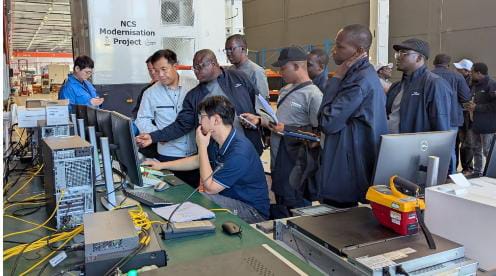
The Nigeria Customs Service (NCS) and Trade Modernisation Project Limited (TMPL) have completed technical tests on new cargo inspection scanners and an electronic tracking system in China.
The exercise is part of efforts to modernise cargo processing, strengthen border security and improve trade efficiency across Nigeria’s ports and other Customs-controlled facilities.
The equipment includes Non-Intrusive Inspection (NII) scanners and an Electronic Cargo Tracking System (ECTS). Together, they are designed to improve cargo screening and monitor the movement of goods from ports to their destinations.
Customs Officials Test New Equipment in China
The two-week Factory Acceptance Test (FAT) took place from October 9 to 20, 2026, at the facilities of Nuctech Company Limited, the equipment manufacturer in China.
The Nigerian delegation was led by Oluyomi Adebakin, Deputy Comptroller-General of Customs in charge of Information Communication and Technology/Modernisation.
The exercise involved technical checks to determine whether the scanners and tracking system met agreed specifications and operational standards before shipment to Nigeria.
According to the NCS, the testing stage is important for confirming the equipment’s quality and readiness for deployment.
How the New Scanners Could Change Cargo Inspection
The proposed technology is expected to make cargo examination more efficient by allowing Customs officers to inspect containers and other consignments without relying entirely on physical searches.
The NCS said the equipment could help officers detect concealed goods and prohibited items while reducing cargo processing delays.
Oluyomi Adebakin said the initiative reflects Comptroller-General of Customs Adewale Adeniyi’s commitment to using technology to improve trade facilitation, revenue collection and national security.
She explained that the goal is to deploy equipment suited to operational needs and capable of speeding up cargo examinations.
Electronic Tracking System Targets Cargo Diversion
The Electronic Cargo Tracking System is designed to complement the scanners by supporting the monitoring of goods as they move from ports to their intended destinations.
Umar Madugu, Acting Comptroller of Non-Intrusive Inspection, said the combined systems could reduce the need for 100 per cent physical examination, limit unnecessary human contact and help tackle cargo diversion.
If effectively deployed, the technology could also improve coordination across Customs formations and strengthen oversight of goods moving through the supply chain.
However, the actual benefits will depend on implementation, system reliability, staff readiness and how well the technology integrates with existing Customs operations.
TMPL Describes Testing as a Key Modernisation Milestone
Bamidele Chinedu, General Manager of Trade Modernisation Project Limited, described the factory testing as an important step in implementing the Trade Modernisation Project.
He said integrating non-intrusive inspection scanners with electronic cargo tracking is central to developing a more transparent, technology-driven Customs system.
Niu Chao, Project Manager at Nuctech Company Limited, also pledged the company’s commitment to supplying the equipment and providing technical support, staff training, capacity building and after-sales services.
Nigerian Customs Officers Receive Technical Training
Beyond testing the equipment, technical personnel from the NCS and TMPL received training on operating, handling and maintaining the new systems.
The training is intended to prepare the teams for deployment and support the long-term operation of the technology in Nigeria.
Building local technical capacity will be important to ensuring that the equipment remains functional and delivers the expected benefits after installation.
What the New Customs Technology Means for Importers
For importers, clearing agents and logistics operators, the proposed upgrade could bring several changes if the systems are successfully deployed.
These include:
- Faster cargo processing: Improved scanning could help reduce delays associated with manual inspection.
- Better cargo security: Scanners may help officers identify concealed or prohibited goods.
- Stronger cargo monitoring: Electronic tracking could make it harder to divert consignments from approved routes.
- More efficient inspections: Some shipments may require less physical examination, depending on risk assessments and Customs procedures.
- Improved revenue protection: Better detection and monitoring could help Customs identify non-compliance and protect government revenue.
These are expected benefits, not guaranteed outcomes. The NCS has not stated in the supplied announcement when the equipment will arrive in Nigeria or when operational deployment will begin.
What Happens Next?
The completion of the Factory Acceptance Test marks a step towards deploying the new scanners and tracking system in Nigeria.
The next stages will involve the relevant delivery, installation, operational preparations and regulatory or technical arrangements required for use.
For the technology to deliver lasting results, Customs will need reliable maintenance, trained personnel, effective data management and clear operating procedures.
The key point: Nigeria Customs is moving towards more technology-based cargo inspection and tracking. The real test will be whether the systems reduce delays, improve enforcement and make legitimate trade more predictable for businesses.
Source: Details supplied in the announcement by the Nigeria Customs Service and Trade Modernisation Project Limited.