
In this article
Africa’s energy and trade landscape is set for another major infrastructure boost as Dangote Group begins work on a $660 million oil terminal and pipeline project linking Djibouti and Ethiopia.
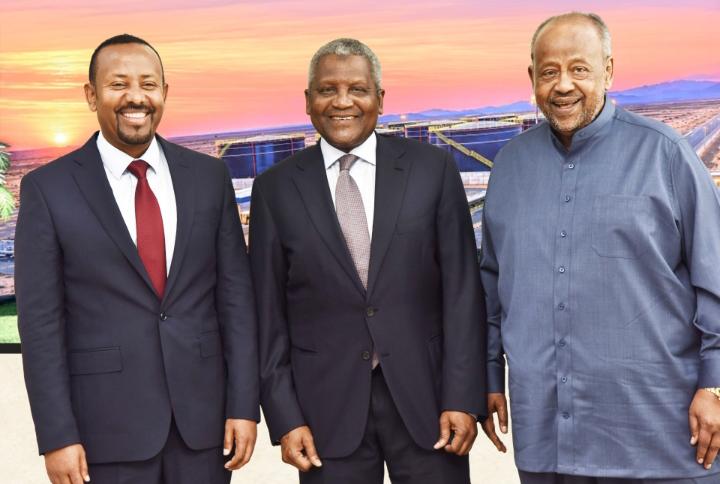
Ethiopian Prime Minister Abiy Ahmed and Djiboutian President Ismaïl Omar Guelleh have described the project as a major investment that could strengthen energy security, improve regional trade and accelerate economic activity across the Horn of Africa.
The leaders spoke on Thursday, September 24, 2026, at the groundbreaking ceremony of the Damarjog-Dewele Oil Terminal and Pipeline Project, held at the Damerjog Industrial Development Free Trade Zone in Djibouti.
The project is being championed by Aliko Dangote, President and Chief Executive of Dangote Industries Limited, as part of the group’s broader push to develop strategic industrial and energy infrastructure across Africa.
120km pipeline connecting Djibouti to Ethiopia
At the heart of the project is a 120-kilometre multiproduct pipeline designed to connect marine and coastal storage facilities at Damarjog in Djibouti with inland storage and distribution facilities at Dewele in Ethiopia.
When completed, the pipeline is expected to provide a more efficient route for transporting refined petroleum products into Ethiopia while reducing some of the logistical challenges associated with long-distance tanker transportation.
The project is therefore expected to improve fuel supply reliability and support the energy needs of major sectors of the Ethiopian economy, including aviation, transportation, agriculture, manufacturing and construction.
Djibouti eyes bigger role as African trade hub
For Djibouti, the investment goes beyond petroleum infrastructure.
President Guelleh said the project would support the country’s ambition to become a major logistics, industrial and energy hub in Africa.
He said increased petroleum and other commercial activities could boost port operations, attract fresh investments and create direct and indirect employment opportunities.
The Djiboutian president also described the project as an example of African-led investment aimed at addressing African infrastructure challenges.
According to him, the pipeline is expected to increase trade volumes, strengthen commercial activity and improve investor confidence while reinforcing Djibouti’s position as an important gateway linking regional economies.
Ethiopia expects stronger fuel security
For Ethiopia, the biggest attraction is energy security.
Prime Minister Abiy Ahmed said reliable and efficient access to petroleum products is critical to sustaining the country’s economic expansion and industrialisation plans.
He said the pipeline would provide a modern and dependable channel for transporting refined petroleum products into Ethiopia, while reducing vulnerabilities in the existing supply chain.
The project is also expected to reduce transportation bottlenecks, improve the efficiency of petroleum distribution and provide a more stable fuel supply for critical economic activities.
Abiy further said better petroleum logistics could improve product quality control and reduce losses associated with transporting petroleum products over long distances.
Dangote: Project will benefit both countries
Speaking at the groundbreaking ceremony, Aliko Dangote said the project fits into Dangote Group’s broader ambition of building infrastructure capable of supporting Africa’s economic development and self-sufficiency.
Dangote said the pipeline would strengthen energy security, improve supply-chain efficiency and create economic opportunities for both Ethiopia and Djibouti.
Under the arrangement, Djibouti is expected to benefit from increased port activity, higher revenues and new employment opportunities, while Ethiopia would gain improved access to refined petroleum products and fewer logistics constraints.
Dangote also pointed to the strategic importance of the Djibouti corridor, which serves as a major route for Ethiopia’s imports and exports, including petroleum products.
He said moving petroleum products through a pipeline could reduce dependence on long-distance tanker movements, ease road congestion and lower transportation risks, including potential product losses and environmental incidents.
Thousands of jobs expected
The project is also expected to have an employment impact.
According to the project announcement, thousands of jobs could be created during construction and operation, while local contractors, suppliers, transport operators and host communities are expected to benefit from increased economic activity.
The project will also provide opportunities for skills transfer and technical employment as the infrastructure moves from construction into operation.
Part of Dangote’s $50bn Africa investment plan
The Damarjog-Dewele project forms part of Dangote Group’s Vision 2030 strategy, under which the conglomerate plans to invest $50 billion across Africa in industrial and energy infrastructure.
The broader strategy is aimed at supporting regional trade, industrialisation and economic self-sufficiency.
Dangote said the group’s objective is to help African countries reduce dependence on imported products by developing infrastructure that supports local production and intra-African trade.
The new pipeline project therefore extends Dangote Group’s growing footprint beyond Nigeria, building on major investments such as the Dangote Petroleum Refinery and other industrial projects across the continent.
What the project means for Africa
The Damarjog-Dewele pipeline is more than a petroleum transportation project. Its potential impact cuts across energy, logistics, trade, employment and industrial development.
By connecting coastal petroleum storage in Djibouti to inland distribution infrastructure in Ethiopia, the project is designed to make the movement of refined petroleum products more efficient while strengthening a major regional trade corridor.
For Dangote Group, it is another step in its push to build African infrastructure for African markets.
For Ethiopia and Djibouti, the project represents an effort to improve energy reliability, strengthen trade links and attract further economic investment.
And for the wider Horn of Africa, the $660 million project could become an important piece of infrastructure in the region’s drive toward stronger economic integration.
The construction has now begun. The bigger question is how quickly the pipeline can translate into cheaper, safer and more reliable petroleum logistics for the region.