
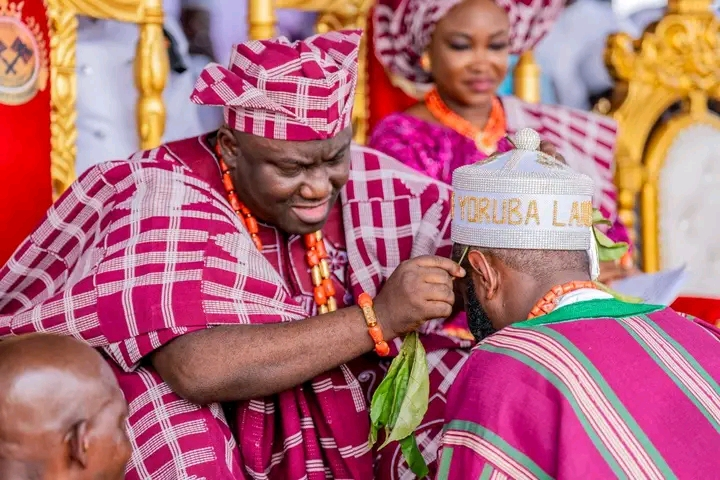
The Alaafin of Oyo, one of Nigeria’s most revered traditional rulers, has conferred a prestigious chieftaincy title on Seyi Tinubu, an event that has quickly become a major talking point across the country’s political, cultural, and social spaces.
The ceremony, held in Oyo town, was marked by rich cultural displays, traditional rites, and the presence of royal chiefs, dignitaries, and well-wishers. The honour reflects the Alaafin’s enduring role as a custodian of Yoruba heritage, where chieftaincy titles are often bestowed to recognize service, influence, or contribution to society.
Seyi Tinubu, an entrepreneur and son of President Bola Ahmed Tinubu, received the title amid chants, drumming, and traditional blessings, symbolising acceptance into the ancient Oyo royal structure. Supporters describe the honour as recognition of youth engagement, philanthropy, and involvement in social development initiatives, particularly among young Nigerians.
However, the event has also sparked public debate. While many see the chieftaincy as a cultural gesture rooted in tradition, others have raised questions about the intersection of royalty, influence, and modern politics. On social media and in public discourse, opinions remain divided — reflecting Nigeria’s vibrant democratic culture where tradition and contemporary governance often meet.
Despite differing views, the ceremony underscores the continued relevance of traditional institutions in national conversations. The Alaafin’s palace remains a powerful symbol of history, authority, and cultural continuity, capable of shaping narratives beyond politics.
As Nigeria navigates the balance between heritage and modern leadership, the conferment of this chieftaincy title stands as a reminder that traditional stools still carry weight — not just as relics of the past, but as active voices in the present.
About the Author