
Mary-Brenda Akoda has won the 2026 Nigeria Prize for Science and Innovation (NPSI) for developing GenScan AI (GenMRI/C-MORE), an artificial intelligence-powered technology designed to significantly reduce the time required for Magnetic Resonance Imaging (MRI) scans.
Akoda made history as the first millennial and first woman to win the prestigious prize as an individual recipient, marking a major milestone in the 22-year history of the award.
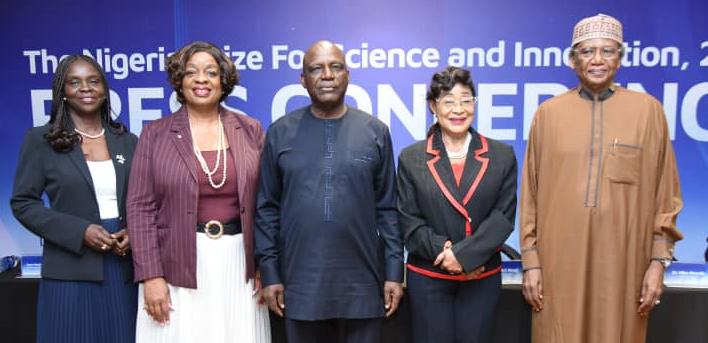
Her victory was announced at the 2026 Nigeria Prize for Science and Innovation press conference in Lagos following an independent evaluation by the Prize’s Panel of Judges and approval by the NPSI Advisory Board.
GenScan AI emerged as the winning innovation from a record 237 entries, the highest number submitted since the establishment of the prize.
The Panel of Judges, chaired by Dr Omobola Johnson, unanimously recommended Akoda’s innovation for the award, with the recommendation subsequently endorsed by the NPSI Advisory Board.
AI Technology Could Cut MRI Scan Time by 90%
GenScan AI incorporates an AI-powered MRI reconstruction technology designed to shorten image acquisition time while maintaining or potentially improving image quality.
At the centre of the technology is the C-MORE algorithm, which uses a one-step consistency-model framework to reconstruct MRI images.
According to the judges, the technology has the potential to reduce MRI scan times by up to 90 per cent without requiring new MRI hardware.
They said the innovation could improve scanner utilisation, reduce waiting periods for patients and expand access to MRI services, particularly in healthcare systems facing resource constraints.
The judges identified GenScan AI as the strongest of the three shortlisted innovations based on its combination of scientific originality, technical robustness, developmental impact and commercial scalability.
NLNG Hails Quality of 2026 Entries
Speaking at the event, the General Manager, External Relations and Sustainable Development of NLNG, Dr Sophia Horsfall, said the emergence of a winner after the prize recorded a “no winner” verdict in 2025 demonstrated the organisation’s commitment to maintaining high standards.
She said the 2026 outcome also highlighted the depth and potential of Nigerian science and innovation.
Horsfall disclosed that the competition retained its theme, “Innovations in Artificial Intelligence, ICT and Digital Technologies for Development,” and attracted 237 entries.
She said the high standard of scrutiny meant that any innovation eventually selected for the prize must have demonstrated sufficient merit to justify the recognition.
“If an entry is declared worthy of the Prize today, we can be confident that it has earned that distinction through a thorough and credible evaluation process,” she said.
Horsfall commended the Advisory Board and Panel of Judges for what she described as their professionalism, independence and integrity throughout the selection process.
Nnaji: GenScan AI Can Transform Medical Imaging
Chairman of the NPSI Advisory Board, Professor Barth Nnaji, said the unanimous decision to select GenScan AI reflected the quality of the technology and its potential to tackle important healthcare challenges.
Nnaji explained that the assessment process went beyond scientific novelty, focusing on innovations capable of demonstrating practical relevance, measurable impact and potential for real-world deployment.
He said GenScan AI stood out by combining advanced artificial intelligence with a practical healthcare application capable of improving the efficiency and accessibility of medical imaging.
The 2026 award represents the 12th time a winning work has been recognised in the 22-year history of the prize, which has now been rebranded as The Nigeria Prize for Science and Innovation.
Akoda will receive the US$100,000 prize at the Grand Award Night scheduled for October 9, 2026.
Who Is Mary-Brenda Akoda?
Akoda is a First-Class graduate of Computer Science from Goldsmiths, University of London.
She also holds a Master of Research with Distinction in Artificial Intelligence and Machine Learning from Imperial College London, where she was a Google DeepMind Scholar.
Her professional experience includes working as a software engineer and AI research scientist at Microsoft, including with the Microsoft Mixed Reality and AI Research Lab.
Her GenScan AI innovation now places her among the leading Nigerian innovators being recognised for applying artificial intelligence to real-world healthcare challenges.
About the Author