

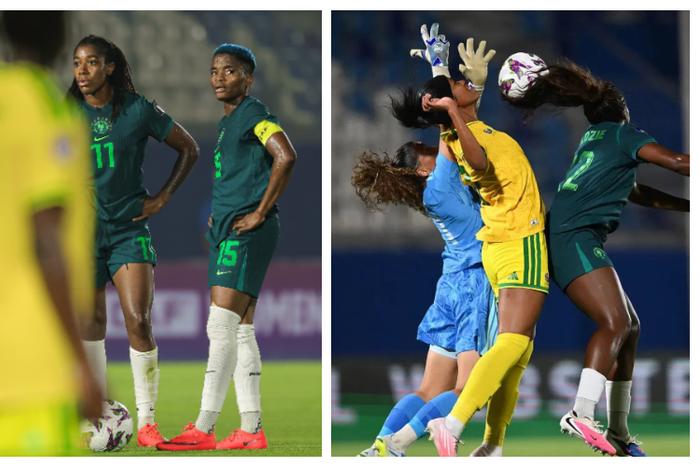
Nigeria’s Super Falcons have suffered a historic setback after losing 2–1 to South Africa’s Banyana Banyana in a crucial 2027 FIFA Women’s World Cup qualification playoff in Casablanca, Morocco.
The defeat at the Stade Moulay Rachid on Thursday, August 13, 2026, ended Nigeria’s hopes of reaching the next Women’s World Cup and brought an end to the country’s remarkable record of appearing at every edition of the tournament since its inception.
The result is particularly painful for the nine-time African champions, who entered the encounter needing victory to keep their World Cup hopes alive after failing to secure an automatic qualification spot.
South Africa Strike Twice
Banyana Banyana took control of the decisive encounter in the second half, with Thembi Kgatlana opening the scoring in the 56th minute.
South Africa doubled its advantage through Refiloe Jane in the 77th minute, putting the hosts in a commanding position and leaving Nigeria with little room for error.
The Super Falcons eventually pulled one back in stoppage time through Christy Ucheibe, but the late goal came too late to rescue Nigeria’s World Cup campaign.
Despite Nigeria’s late push, South Africa held on to secure a famous victory and advance to the next stage of the qualification process.
Historic World Cup Absence for Nigeria
The loss marks a watershed moment for Nigerian women’s football.
The Super Falcons had previously featured at every FIFA Women’s World Cup since the inaugural tournament in 1991, making Nigeria one of the most consistent teams in the history of the competition.
That extraordinary record has now come to an end.
Nigeria’s failure to qualify also means the Super Falcons will not be present when Brazil hosts the 2027 FIFA Women’s World Cup.
Another Blow After WAFCON Setback
The World Cup disappointment comes shortly after another difficult moment for Nigeria at the 2026 Women’s Africa Cup of Nations.
The Super Falcons failed to secure one of the automatic World Cup qualification places and were forced into the playoff route, where they faced South Africa in a decisive encounter.
The new qualification format gave teams that missed direct qualification another opportunity through the playoff system, but Nigeria could not take advantage of the second chance.
South Africa, meanwhile, capitalised on the opportunity and eliminated one of Africa’s most decorated women’s football teams.
A Painful Night for Nigerian Football
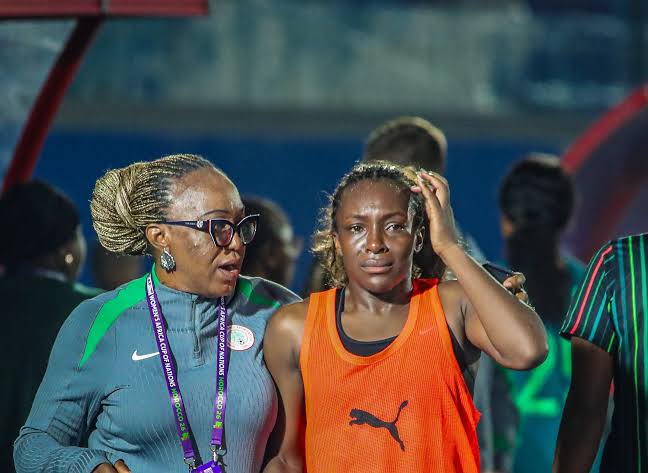
For Nigerian fans, the defeat represents more than another disappointing result.
The Super Falcons have traditionally been regarded as the dominant force in African women’s football, with an unrivalled record on the continent and a reputation for competing strongly on the global stage.
Their absence from the 2027 World Cup will therefore leave a major void and raises fresh questions about the direction of Nigerian women’s football, particularly regarding preparation, squad development and the management of the national team.
South Africa’s victory, on the other hand, represents another significant step forward for Banyana Banyana, who continue to establish themselves as one of the strongest forces in African women’s football.
Nigeria’s World Cup Run Ends in Casablanca
The final whistle in Casablanca confirmed what Nigerian supporters had feared: the Super Falcons’ historic World Cup streak is over.
For the first time, Nigeria will watch the FIFA Women’s World Cup from home.
The immediate focus will now shift to rebuilding, assessing what went wrong and ensuring that the Super Falcons return stronger for the next qualification cycle.
For now, however, Casablanca will be remembered as the night Nigeria’s remarkable Women’s World Cup record came to an end.
Final: South Africa 2–1 Nigeria
Venue: Stade Moulay Rachid, Casablanca, Morocco
Date: Thursday, August 13, 2026
Competition: 2027 FIFA Women’s World Cup qualification playoff
About the Author