
The crisis rocking Nigerian football has entered a crucial new phase after a joint FIFA and CAF fact-finding delegation completed its two-day assessment mission in Abuja and departed Nigeria for Zurich with submissions from key stakeholders.
The delegation arrived in Nigeria as FIFA and the Confederation of African Football (CAF) sought to establish the facts surrounding the turmoil at the Nigeria Football Federation (NFF) following the mass resignation of the federation’s leadership.
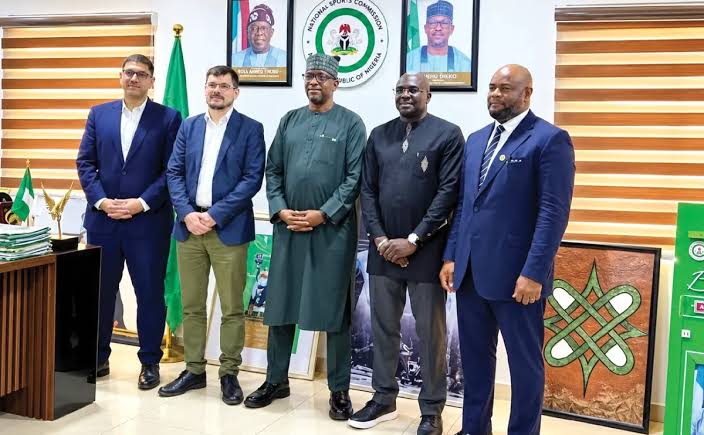
The FIFA/CAF team held consultations with representatives of the NFF, electoral bodies, government officials and other stakeholders as it examined the legal, administrative, governance and electoral issues surrounding the crisis.
FIFA AND CAF NOW HAVE THE STAKEHOLDERS’ SUBMISSIONS
Following the meetings, the delegation left Nigeria for Zurich with the submissions gathered during the consultations.
The information will now be considered as FIFA and CAF assess what steps should follow in resolving the leadership crisis.
Reports say the delegation’s mission was designed to give the international football authorities a clearer understanding of the competing positions among Nigerian football stakeholders before any further action is taken.
NFF ELECTORAL PROCESS ALREADY ON HOLD
The development comes after FIFA and CAF instructed the NFF to suspend its ongoing electoral process.
The NFF elective congress had been scheduled for September 27, 2026, in Lafia, Nasarawa State, but the process was halted as FIFA and CAF began assessing the legal and governance implications of the leadership crisis.
That suspension has created uncertainty over when and how a new NFF leadership will eventually emerge.
CRISIS DEEPENED AFTER MASS RESIGNATIONS
The situation escalated dramatically after NFF President Ibrahim Musa Gusau, General Secretary Mohammed Sanusi and members of the Executive Committee resigned.
The National Sports Commission subsequently endorsed former NFF Deputy General Secretary Emmanuel Ikpeme to oversee the NFF Secretariat as interim General Secretary.
The resignations followed a turbulent period for Nigerian football, including the Super Eagles’ failure to qualify for the 2026 FIFA World Cup and the Super Falcons’ failure to qualify for the 2027 Women’s World Cup.
FACT-FINDING COMMITTEE REPORT ADDS TO PRESSURE
The FIFA/CAF intervention also comes against the backdrop of an earlier NFF fact-finding process.
Former NFF General Secretary Fanny Amun, who chaired the committee, later explained his decision to resign from the committee after submitting its report, saying he wanted to protect the integrity and independence of its findings.
The report and subsequent leadership upheaval have intensified calls for changes to the administration of Nigerian football.
WHAT HAPPENS NEXT?
For now, there is no confirmed final FIFA decision on the future structure of the NFF.
The next stage will depend on FIFA and CAF’s assessment of the information gathered during the Abuja meetings and the applicable FIFA, CAF and NFF regulations.
The biggest questions now are whether the suspended electoral process will eventually resume, whether changes will be demanded before a new election can take place, and what structure FIFA and CAF will support for the transition.
For Nigerian football, the stakes are enormous.
After weeks of resignations, competing positions and uncertainty over the federation’s leadership, the spotlight is now firmly on Zurich as FIFA and CAF consider what comes next for the NFF.
About the Author